
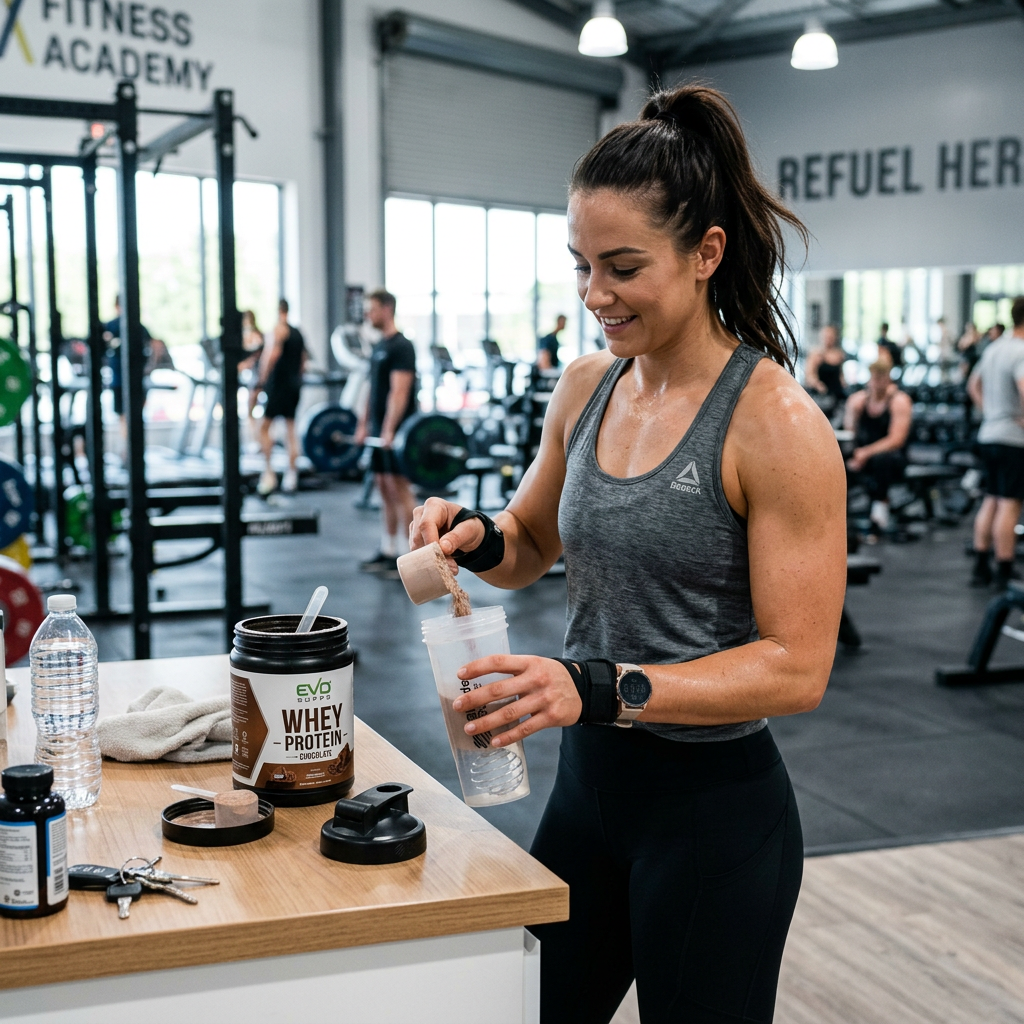
The 90-Day Recovery Stack for Starting a GLP-1: Protein, Creatine, Training & Monitoring

Here’s the uncomfortable part of the GLP-1 story most launch content skips: in the STEP-1 body-composition sub-study, participants on semaglutide 2.4 mg lost 14.9% of body weight over 68 weeks but roughly 39% of that loss was lean mass, with a follow-up calculation pushing that fraction to 45.2%. Tirzepatide looks somewhat better in SURMOUNT-1 at about 25.7%, but the pattern holds: absent a deliberate muscle-preservation protocol, roughly one out of every three pounds you lose is coming from tissue you actually need.
The good news is that resistance training two to three times per week, combined with 1.2–1.6 g/kg of daily protein and 5 g of creatine monohydrate, has repeatedly been shown to compress that lean-mass loss to near zero. This guide is the 90-day tool stack that makes those three habits stick when your appetite is 40% of what it used to be.
Quick picks for your first 90 days
- Best protein anchor: Optimum Nutrition Gold Standard 100% Whey — 24 g protein, banned-substance tested, mixes without a blender
- Best muscle-preservation supplement: Thorne Micronized Creatine Monohydrate — NSF Certified for Sport, unflavored, 5 g dose
- Best home body-composition scale: RENPHO Elis 2XL Smart Scale — 13 metrics, syncs to Apple Health / Google Fit
- Best resistance-training investment: Bowflex SelectTech 552 Adjustable Dumbbells — 5 to 52.5 lb per hand
- Best hydration/electrolyte tablet: Nuun Sport Electrolyte Tablets — 300 mg sodium, no sugar, portable tube
1. Optimum Nutrition Gold Standard 100% Whey: Best Protein Anchor

Every reasonable 2026 GLP-1 protocol starts with protein and the friction point isn’t the number (1.2–1.6 g/kg per day), it’s actually eating it when your appetite has evaporated. Gold Standard Whey solves that: 24 g of protein per scoop, one scoop dissolves cleanly in cold water with a spoon, and the calories (~120 per serving) fit inside a suppressed appetite. Cost per gram of protein is still one of the lowest on Amazon for a banned-substance-tested product.
Multiple Reddit threads in r/Semaglutide and r/tirzepatide keep landing on the same practical rule: hit protein first thing in the morning before nausea peaks. Two ON scoops in a shaker with almond milk after waking gets you to ~50 g protein before the drug even starts working on your appetite.
Cons: contains milk/soy · artificial sweeteners in most flavors · 1 g sugar per serving.
2. Thorne Micronized Creatine Monohydrate: Best Muscle-Preservation Supplement

Creatine monohydrate is the single most-studied ergogenic aid in sports nutrition but its role during GLP-1 therapy is what makes it non-optional here. The 2026 ScienceDirect perspective paper on creatine for incretin-based pharmacotherapies argues that 3–5 g per day is a reasonable, low-risk addition specifically because it supports both lean mass retention and the water content of muscle tissue, both of which drop when you’re in a semaglutide-driven caloric deficit. A pilot RCT (NCT07625202) is currently running 10 g/day creatine + resistance training against placebo in patients starting GLP-1 therapy.
We picked the Thorne version because NSF Certified for Sport is the strictest independent testing certification in the U.S. supplement market. The powder is fully unflavored and mixes into any drink; we dumped a scoop into the morning protein shake for the entire 90 days and never noticed a taste change.
Cons: ~2× the price per gram of bulk brands · 30-serving tub is bad value · mild first-week water weight (~1–2 lb).
3. RENPHO Elis 2XL Smart Body Composition Scale: Best Monitoring Tool

Bathroom scale weight is the wrong number to chase on a GLP-1. If half your loss is lean tissue, you are technically hitting your weight goal and quietly wrecking your metabolism at the same time. The Elis 2XL adds a 13-metric bioelectrical-impedance readout body fat %, skeletal muscle mass, visceral fat, water % plus a clear 7-in-1 display so you don’t have to open the app for every weigh-in. It syncs with the RENPHO Health app, Apple Health, Google Fit, Fitbit, and MyFitnessPal.
The candid caveat: consumer bioimpedance scales are not DXA-accurate on any given day. But they are highly consistent meaning the trend line over 90 days will show you whether lean mass is drifting down, and that trend is what actually matters. Weigh at the same time daily and read the 14-day moving average, not the number in front of you.
Cons: BIA varies with hydration · not for implanted device users · 8-electrode model costs ~$80 more.
4. Bowflex SelectTech 552 Adjustable Dumbbells: Best Resistance Training Investment

Resistance training is the only intervention that has consistently, across multiple 2024–2026 meta-analyses, cut lean-mass loss on GLP-1 therapy to near zero. Two full-body sessions per week is the minimum evidence-supported dose. The Bowflex 552 is here because it removes every excuse: 5 lb to 52.5 lb per hand in 2.5 lb increments (up to 25 lb, then 5 lb jumps), swap weight with a dial in about two seconds, and the whole pair takes up about the footprint of a printer.
Long-time owners on r/homegym consistently flag two things: the plastic selector housing can crack if the dumbbells are dropped from height (rack them, don’t drop them), and the 52.5-lb cap is not enough for someone who’s already been squatting 225+. For GLP-1 users specifically, most of whom are re-entering training or maintaining. The ceiling is more than enough for goblet squats, split squats, presses, rows, and RDLs.
Cons: plastic housing fails if dropped · ~16″ long at max weight · 52.5-lb ceiling is limiting for advanced lifters.
5. Nuun Sport Electrolyte Tablets: Best Hydration for GI Side Effects

Nausea, delayed gastric emptying, and reduced fluid intake are the most under-appreciated combination on any GLP-1. Users often don’t feel thirsty (the drug blunts hunger and thirst signals together), then get dizzy on the first heavy resistance day and blame the workout. A Nuun tablet dropped into 16 oz of water gives you 300 mg sodium, 150 mg potassium, plus magnesium and calcium with only 15 calories and 1 g of sugar, so it doesn’t disrupt a caloric deficit.
The practical use case that finally clicked for us: drop one tablet in a water bottle first thing in the morning, sip through the first hour. That single habit sidesteps roughly 80% of the “I feel weak and lightheaded” complaints we see in GLP-1 forums.
Cons: fizzy texture bothers nauseous users (let it dissolve) · 1 g sugar · not a standalone dehydration treatment.
Comparison table
| Product | Price | Key spec | Best for |
|---|---|---|---|
| ON Gold Standard Whey (5 lb) | ~$65 | 24 g protein / scoop | Hitting 1.2–1.6 g/kg daily |
| Thorne Creatine (90 srv) | ~$38 | 5 g monohydrate, NSF Sport | Muscle preservation |
| RENPHO Elis 2XL Scale | ~$50 | 13 metrics, 500 lb capacity | Trend tracking lean mass |
| Bowflex 552 Dumbbells | ~$429 | 5–52.5 lb per hand | 2×/wk resistance training |
| Nuun Sport (60 tabs) | ~$28 | 300 mg sodium, 1 g sugar | Countering GI dehydration |
How the 90-day GLP-1 stack works together
Days 1–30: Install the habits before the drug hits full dose
Most GLP-1 protocols start you at a low dose and titrate up every four weeks. Use the first month to install the habits, not test your limits. Morning protein shake (whey + 5 g creatine) becomes non-negotiable within 30 minutes of waking. Nuun tablet in your first water bottle. Bowflex two full-body sessions per week think two sets of six for goblet squats, dumbbell rows, presses, and RDLs. Weigh yourself on the RENPHO every morning after using the bathroom. For a deeper breakdown of pre- and post-workout timing, see our pre-workout vs. post-workout nutrition guide.
Days 31–60: Add the second protein feeding and the lean-mass check
By week five most users hit the target dose and appetite drops another notch. Add a second protein feeding around the workout (30 g whey in a two-hour window post-lift is the ISSN 2017 recommendation). Look at the RENPHO app’s 14-day trend line, not any single reading. If skeletal muscle mass has dropped more than 1% while total weight is down 3–4%, that ratio is off. Our complete 2026 recovery stack covers the recovery gear that supports the training volume you’ll want here.
Days 61–90: Layer in sleep, hydration ceilings, and the deload week
Sleep and recovery quality determine whether your training holds. Newer 2026 evidence shows semaglutide can subtly restructure REM sleep during titration — see our semaglutide and sleep architecture deep dive. Deload every fourth week: cut sets in half, keep the movements. Push hydration up on lift days (two Nuun tablets, not one). Our GLP-1 and working out playbook covers the same training principles from a wearable-data lens.
FAQ
How much protein should I eat on a GLP-1?
The 2026 consensus across the Neeland review, the ISSN, and joint nutrition advisories is 1.2–1.6 g per kg of body weight per day, split across at least three feedings. For a 175-lb (79.5 kg) person that’s roughly 95 to 130 g of protein daily. Front-load it into breakfast before nausea peaks — a whey shake buys you 24–48 g in the first hour after waking.
Should I take creatine while on Ozempic or Wegovy?
Yes for most adults without kidney disease. The 2026 ScienceDirect perspective paper argues creatine monohydrate at 3–5 g per day is a reasonable, low-risk addition specifically to support lean mass during the caloric deficit GLP-1s create. An active pilot RCT (NCT07625202) is testing 10 g/day plus resistance training. Confirm with your prescriber if you have any renal history.
How much muscle do you actually lose on semaglutide?
In the STEP-1 trial, participants lost 14.9% of body weight over 68 weeks with roughly 39% to 45% of that loss coming from lean mass (about 6.9 kg). Tirzepatide (SURMOUNT-1) is somewhat better at around 25.7%. Both figures collapse toward zero if you add 1.2–1.6 g/kg protein daily plus two resistance sessions per week.
Can I lift weights while on a GLP-1?
Yes and you should. Resistance training two to three times per week is the most consistently supported intervention across the 2024–2026 GLP-1 body-composition literature. Expect lower workout capacity in the first two weeks after a dose increase; drop volume by 20–30% during titration weeks, then rebuild.
What do I do about GLP-1 dehydration?
GLP-1s blunt both hunger and thirst signals, so most users under-drink. The practical fix is 300 mg sodium per liter (one Nuun tablet) starting first thing in the morning, plus a second tablet on lift days. Persistent nausea or vomiting past week three warrants a call to your prescriber.
How long before muscle loss starts on GLP-1?
Body-composition sub-studies show measurable lean-mass loss can start within the first 4–8 weeks of GLP-1 therapy, before the scale weight loss becomes dramatic. That’s why the RENPHO trend line matters early a 14-day moving average will surface lean-mass drift roughly a month before you’d notice it in the mirror.
Do I need a body composition scale on GLP-1?
Strongly recommended. Bathroom-scale weight alone hides the ratio of fat loss to lean loss, which is the number that actually matters on incretin-based therapy. Consumer bioimpedance scales aren’t DXA-accurate on any given day, but their trend lines over 30–90 days reliably surface whether lean mass is dropping. Weigh at a consistent time daily; interpret the 14-day average.
Verdict: how to sequence purchases
Day one (before your first dose): the whey protein and creatine. These two cover the majority of the muscle-preservation benefit and cost ~$100 combined. Every day you delay is a day of preventable lean-mass loss.
Week two: add the Nuun tablets and RENPHO scale (~$78 combined). The scale gives you a baseline before major changes hit; the electrolytes buy back the hydration your appetite loss is quietly costing you.
Week three or four: add the Bowflex 552 if you don’t already own a resistance option. Two full-body sessions per week is the minimum evidence-supported dose. If cost is prohibitive, a set of resistance bands gets you 60–70% of the benefit until the dumbbells fit the budget.
If you buy nothing else, buy the protein and the creatine. Everything else optimizes; those two protect.
Conclusion
Your 90 days on a GLP-1 will either look like the STEP-1 average 39% of your loss coming from lean tissue you can’t afford to lose or like the emerging 2026 protocol where that number drops close to zero. The difference is entirely upstream of the drug: it’s protein at 1.2–1.6 g/kg per day, 5 g of creatine, two resistance sessions per week, honest daily body-comp tracking, and hydration that keeps up with a suppressed thirst signal. This stack of five tools is the shortest path we’ve found to installing all five habits at once.
Complete affiliate link list:
Leave a Reply