
RollRestore Editorial Team · Reviewed June 2026

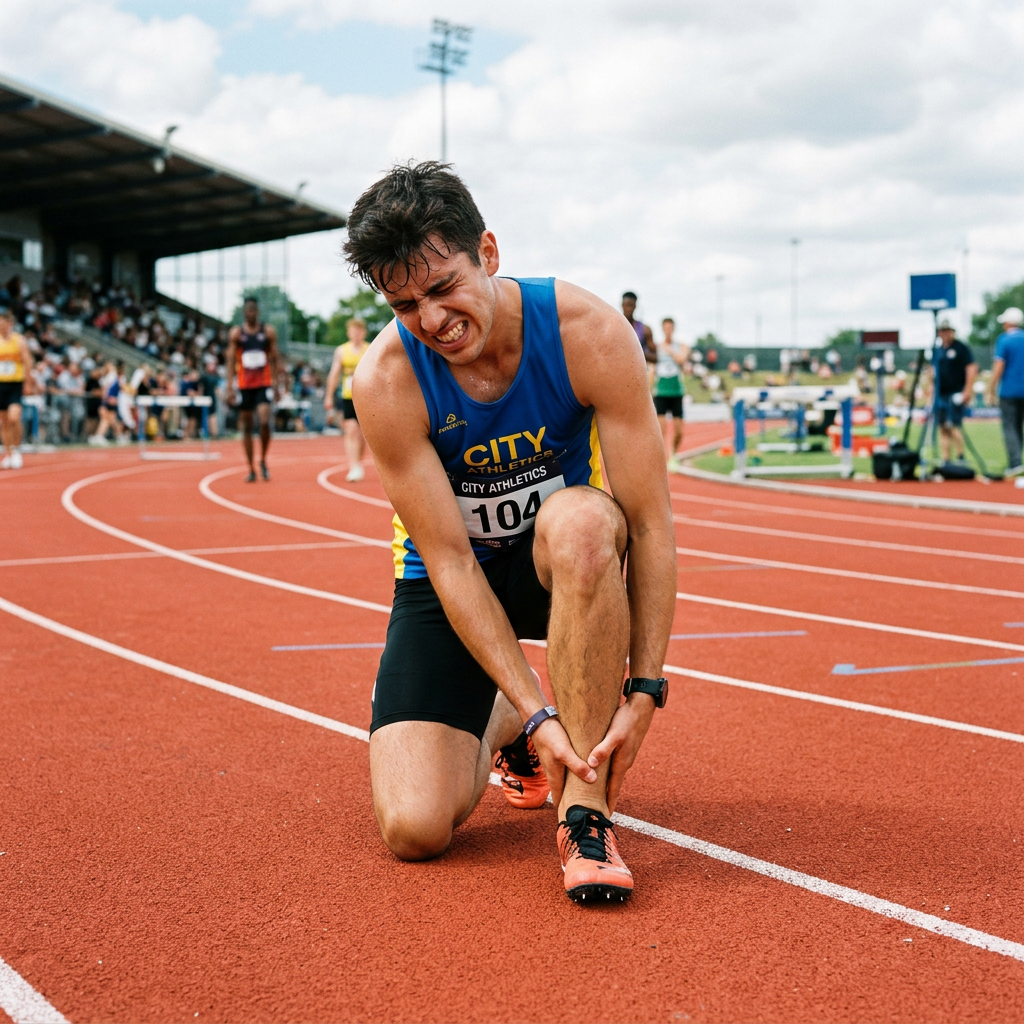
Achilles pain rarely resolves with rest alone the 2024 JOSPT clinical practice guideline points to loading, not unloading, as the highest-evidence intervention.
Key Findings
Achilles tendinopathy affects up to 52% of endurance runners over a lifetime, yet the consensus from the 2024 JOSPT Clinical Practice Guideline is that complete rest is the wrong move, tendons remodel under load. Heavy slow resistance and Alfredson-style eccentric heel drops produce equivalent, durable outcomes (Beyer et al., AJSM 2015). The top pick for most readers is the flybold Slant Board for executing eccentric loading correctly at home; a 1.4-inch heel lift is the under-recognized tool for insertional pain. Recurrence rate after return-to-running sits near 27%, and proper progression matters more than total rest weeks.
- Why complete rest fails (and what the 2024 CPG says instead)
- Decision tree: which tool you actually need
- 2026 Achilles recovery stack — at-a-glance
- The 5-tool stack (verified, in-stock)
- The 12-week train-around-it protocol
- Three buying mistakes that waste money
- Frequently Asked Questions
- Verdict
- What this means for your training next week
Why complete rest fails (and what the 2024 JOSPT CPG says instead)
Achilles tendinopathy is an overuse injury with a midportion prevalence of 4–7% in the general population and a cumulative lifetime incidence approaching 52% in endurance runners (Lagas et al., systematic review, 2022). The pathology is not classical inflammation, biopsies show collagen disorganisation, neovascularisation and altered tenocyte metabolism. That distinction matters because anti-inflammatory rest does not reorganize a tendon. Mechanical loading does.
The 2024 JOSPT Clinical Practice Guideline for Midportion Achilles Tendinopathy the third revision from the Academy of Orthopaedic Physical Therapy gave its strongest recommendation to progressive tendon loading. Eccentric heel drops (the Alfredson protocol) and heavy slow resistance both qualify. Cleveland Clinic’s patient guidance follows the same logic: rest the painful provocation, but not the tendon itself.
The contrarian takeaway most runners miss: you do not need to stop running to recover. The 2024 CPG explicitly notes that pain monitored during loading is acceptable up to a tolerable threshold, and a JOSPT return-to-running framework built around symptom-guided progression has outperformed time-based protocols since 2015. The cost of complete rest is detraining without remodeling, twelve weeks off, then re-injury within four.
Decision tree: Which tool you actually need
Match the tool to the phase, not the price tag
- Question 1: Where does it hurt?
- 2–6 cm above the heel (midportion) → start with a slant board for eccentric heel drops.
- At the heel bone insertion → start with a heel lift to offload, then progress to slant board with 0° floor heel drops only (no decline).
- Question 2: Pain level on a 0–10 scale during loading?
- ≤ 3/10 → progress eccentric volume (Alfredson 3×15, twice daily).
- 4–5/10 and settles within 24 h → hold current load, add isometric calf raises with resistance bands.
- > 5/10 or worse 24 h later → back off load by 20%, prioritise compression sleeves and gentle calf myofascial work.
- Question 3: Training history this week?
- Lifting / lower-body strength → cap heavy calf raises at RPE 7 and substitute slant-board eccentric work for assistance sets.
- Running 3+×/week → run on flat, hard surfaces at a higher cadence (these reduce Achilles force vs. soft trails, see tendon loading study, PMC 9972464).
- No structured training → walking + slant board + bands is enough to drive remodeling.
Quick picks: The verified 2026 Achilles stack
- Top pick (eccentric loading): flybold Adjustable Slant Board
- Insertional pain offload: SQHT 1.4″ Heel Lift Inserts
- Symptom management: CAMBIVO Calf Compression Sleeves
- Progressive isometric / band work: Whatafit Resistance Bands Set
- Calf myofascial maintenance: RENPHO R3 Active Massage Gun
2026 Achilles recovery stack : At-a-glance comparison
| Product | Best for | Phase used | Typical price |
|---|---|---|---|
| flybold Slant Board | Eccentric heel drops, calf stretching | Phase 2–4 | $40–$55 |
| SQHT 1.4″ Heel Lifts | Insertional offloading, daily wear | Phase 1–2 | $15–$25 |
| CAMBIVO Calf Sleeves | Symptom calming, blood-flow support | Phase 1–3 | $15–$22 |
| Whatafit Resistance Bands | Isometric holds + heavy slow resistance | Phase 2–4 | $25–$35 |
| RENPHO R3 Massage Gun | Soleus / gastroc myofascial release (not on tendon) | Phase 1–4 | $70–$90 |
The 5-tool stack (verified in-stock at the time of writing)
1. flybold Adjustable Slant Board: Top pick for eccentric loading
Approx. $40–$55 · ASIN B07HF7RMGW

The Alfredson protocol, three sets of fifteen eccentric heel drops, twice daily, is the most clinically validated home intervention for midportion Achilles tendinopathy, and a decline surface is what allows the heel to drop below the forefoot to load the tendon through its full range. The flybold Slant Board provides five locked angles (0°, 20°, 30°, 40°, 45°), a 450-pound weight rating, and a non-slip top, all the requirements the eccentric protocol implies but rarely specifies. Without a decline surface, the eccentric work loses the eccentric component that drove the original Alfredson 1998 results documented in the PMC narrative review.
For insertional cases, the same board is used at 0° flat only, heel drops below the step line aggravate the calcaneal insertion. The included spiky ball doubles as a plantar fascia tool for runners who present with both conditions.
Pros: Five angle settings cover full Alfredson progression; 450 lb weight rating supports loaded heel drops; non-slip surface; wide bilateral stance.
Cons: Heavier than collapsible plastic alternatives; decline angles are too aggressive for acute insertional pain.
2. SQHT 1.4-Inch Heel Lift Inserts: The under-recognised offload
Approx. $15–$25 · ASIN B08F2FFKZW

For insertional Achilles tendinopathy, heel lifts reduce strain on the tendon’s calcaneal attachment by reducing dorsiflexion at the ankle. The 2024 trial published in PMC 10851750 reported immediate and short-term symptom improvement in patients with insertional Achilles tendinopathy when in-shoe heel lifts were added, with measurable biomechanical changes at the ankle. The LIFT trial protocol is currently testing heel lifts for midportion presentations as well, early evidence suggests the offload is not just for insertional cases.
The SQHT lifts use a PU foam gel with honeycomb shock absorption and an anti-skid heel cup; the 1.4-inch height matches the lift used in most cited trials. A reader buying these should size to fit the deepest part of the shoe’s heel pocket and avoid using them in low-cut casual shoes, heel slip negates the benefit.
Pros: Direct evidence base for insertional offloading; washable, reusable PU foam construction; honeycomb design prevents in-shoe slipping; available in 0.6″, 1″, and 1.4″ heights for progression.
Cons: Not compatible with low-top sneakers; 1.4″ height may feel exaggerated initially ease in for 24–48 h.
3. CAMBIVO Calf Compression Sleeves: Daily symptom management
Approx. $15–$22 · ASIN B0CJTKKK5N

Compression sleeves do not heal a tendon, but graduated calf compression can reduce perceived soreness during loading sessions and post-run, which improves protocol adherence. Cleveland Clinic and a 2020 review of conservative management both list compression as a reasonable adjunct alongside loading, taping, and footwear adjustments. The CAMBIVO sleeves use 3D knit construction with double-layer cuffs and a kinesiology-strip pattern through the calf belly. They are not medical-grade graduated compression at 20–30 mmHg, but they are well-suited to athletic use during runs and after eccentric sessions.
Most appropriate for: readers in Phase 1–3 who want a wearable tool that travels with their training shoes. Readers managing a confirmed deep-vein issue should consult a physician before any compression purchase.
Pros: 3D knit + double-layer cuffs prevent rolldown; targeted compression through calf belly and Achilles zone; affordable enough to size up and rotate; works under most athletic socks.
Cons: Not graduated medical-grade compression; sizing runs slightly snug.
4. Whatafit Resistance Bands Set: Progressive band loading
Approx. $25–$35 · ASIN B07DWSPQQY

Heavy slow resistance (HSR) training was directly compared to eccentric loading in Beyer et al. (AJSM 2015, n=58) and produced equivalent symptom and function outcomes at 12 and 52 weeks, with greater patient satisfaction at the 12-week midpoint. The catch: HSR requires graded resistance the reader can actually load. A band stack solves this without a gym, five tubes that combine to roughly 150 pounds of resistance, an ankle strap for direct plantarflexion work, and a door anchor for seated calf drives.
Use case: pair the slant board eccentric work with a band-loaded seated calf raise (4×8 with three-second concentric, three-second eccentric) twice a week. This is the closest a home setup gets to the HSR protocol that drove the Beyer results.
Pros: Stacks to 150 lb of resistance, meets HSR loading needs; ankle strap for direct plantarflexion isolation; 2-year manufacturer replacement on band failure; packs flat for travel.
Cons: Bands feel different from free weights, strength curve is non-linear; loading 100+ lb on one ankle takes practice.
5. RENPHO R3 Active Massage Gun: Calf myofascial maintenance
Approx. $70–$90 · ASIN B0CBC12ZR1

A massage gun is the right tool for the calf muscles above the tendon, not the tendon itself. Percussion therapy applied directly to a symptomatic tendon can mask warning pain signals during early healing, a contraindication noted in current sports medicine guidance and reinforced in the Cleveland Clinic Achilles tendinitis page. The R3 is the right form factor for this specific use 675 grams, brushless motor at 45 dB, five attachments. It runs 150 minutes per charge over USB and fits in a gym bag.
Best use: 60–90 seconds per calf muscle group (gastrocnemius medial and lateral heads, soleus) at low-to-moderate amplitude before slant board work, and again 4–6 hours after a hard run. Skip direct contact with the tendon itself.
Pros: Small enough for travel; quiet enough for shared spaces; USB-charged, no proprietary adapter; five attachments cover calf belly to plantar fascia.
Cons: Not for direct use on the tendon, calf only; lighter percussive force than full-size guns.
The 12-week train-around-it protocol
The protocol below combines the Alfredson eccentric framework, the Beyer 2015 HSR comparison, and the JOSPT 2024 return-to-running progression. The reader who follows it stays under load, monitors pain on a 0–10 scale, and modifies by phase, not by calendar date alone.
Phase 1 (Weeks 1–2): Calm the tendon, do not unload it
- Wear the CAMBIVO sleeves during all training and at desk-work for the first 7 days.
- If insertional: insert the SQHT 1.4″ heel lifts in all shoes including casual.
- Calf isometric holds: 5 × 45-second mid-range calf raise holds, twice daily.
- Massage gun on calf muscles (not tendon) for 90 s, twice daily.
- Continue lifting upper body and hinge-pattern lower as tolerated.
Phase 2 (Weeks 3–6): Introduce eccentric loading
- Alfredson protocol on the flybold slant board: 3 × 15 eccentric heel drops, twice daily, 7 days a week.
- Midportion: full decline drops below the step line. Insertional: 0° flat heel drops only.
- Add bodyweight calf raises (2 × 12) as the loaded concentric pair.
- Pain up to 5/10 during the set is acceptable; pain that persists > 24 h is the cue to reduce volume by 20%.
- Walking and easy strength-training continue.
Phase 3 (Weeks 7–9): Heavy slow resistance + light running
- Add HSR band work: Whatafit band seated calf raise, 4 × 8 at the heaviest band that allows controlled tempo, twice weekly.
- Slant board eccentrics taper to once daily.
- Begin walk-jog progression: 1 min jog / 4 min walk × 6, twice in week 7. Increase by 1 minute of jog per session as tolerated.
- Stay on flat surfaces at a cadence of 170+ steps/min both shown to reduce Achilles force per tendon-loading research.
Phase 4 (Weeks 10–12): Return to running and add plyometrics
- Continuous easy running 20–30 min, 3× per week.
- HSR band work continues twice weekly; slant board eccentrics drop to maintenance (3 × 15, three times per week).
- Add low-amplitude pogos and double-leg hops (2 × 20) on flat ground, the JOSPT framework cites plyometric exposure as the bridge back to full training.
- Watch for a 27% recurrence rate at this stage, the data is unambiguous that returning runners under-progress strength and over-progress mileage.
Three buying mistakes that waste money
Mistake 1: Buying a foam roller instead of a slant board
Foam rollers are excellent calf maintenance tools but they cannot reproduce the eccentric load that the Alfredson protocol requires. A foam roller is a complement, not a substitute. If the budget is limited, the slant board is the higher-leverage purchase for an Achilles plan.
Mistake 2: Using the massage gun directly on the tendon
This is the most common error. The percussive head is designed for muscle bellies; applied to a symptomatic tendon, it masks pain and can delay structural remodeling. The R3 belongs on the gastrocnemius and soles, not on the Achilles itself.
Mistake 3: Wearing the 1.4″ heel lift all day, every day, for months
Heel lifts are a short-term offload, typically 6–12 weeks during the symptomatic phase. Wearing them indefinitely can shorten the gastrocnemius/soles complex and create the next problem. Step down through 1.0″ and 0.6″ heights as symptoms resolve and dorsiflexion returns.
Frequently Asked Questions
Can I run with Achilles tendinitis?
Yes, in most non-acute cases, provided pain stays at or below 5/10 during the run and returns to baseline within 24 hours. The 2024 JOSPT guideline treats symptom-monitored loading, including running, as part of treatment, not an obstacle to it. Cadence above 170 steps per minute and flat, hard surfaces reduce Achilles force per stride.
How long does Achilles tendinitis take to heal?
Most cases of mid portion Achilles tendinopathy show meaningful improvement within 8–12 weeks of progressive loading. The Alfredson and Beyer trials reported gains at both 12 and 52 weeks, indicating that the remodeling continues well past the acute phase. Insertional cases typically take longer because the offloading phase delays the eccentric loading start.
Eccentric heel drops or heavy slow resistance, which is better?
Beyer et al. (AJSM 2015) compared the two head-to-head over 52 weeks in 58 patients and found equivalent outcomes on pain, function (VISA-A), and return-to-sport rates. HSR delivered slightly higher patient satisfaction at week 12. Practically: pick the protocol the reader will actually do for the full 12 weeks. A slant board makes Alfredson stick; a band stack makes HSR stick at home.
Should I ice my Achilles?
Ice can be used short-term for acute flare-ups (15 minutes, two to three times per day for the first 48 hours), per Cleveland Clinic guidance, but it has no demonstrated effect on tendon remodeling. Once the acute pain has settled, loading and graduated return-to-running matter far more than the choice between ice and heat.
Is it normal for the slant board to hurt during heel drops?
Discomfort up to a 5/10 during the eccentric drop is part of the protocol and is what Alfredson’s original study described. Sharp pain at the calcaneal insertion, swelling that increases day-over-day, or pain that lingers above baseline for > 24 hours are signs to reduce decline angle, drop to bilateral instead of single-leg drops, or switch to 0° flat drops.
When should I see a physical therapist instead of self-treating?
If pain persists or worsens after 6 weeks of consistent loading, if you have a noticeable lump, audible pop, or sudden inability to push off, or if pain wakes you at night, see a clinician. The 2024 JOSPT CPG includes imaging-based and clinical red-flag criteria that warrant in-person assessment.
Are compression sleeves a substitute for the eccentric protocol?
No. Compression manages symptoms; it does not remodel a tendon. The CAMBIVO sleeves belong in the daily kit, not in place of the slant board. The hierarchy is clear in every cited guideline: loading is the treatment, everything else is supportive.
Verdict
The fastest legitimate path through Achilles tendinitis is graded loading on a slant board, not 12 weeks of cross-training that lets the tendon detrain while the calf shortens. The five-tool stack above maps directly to the four-phase JOSPT-aligned protocol. The flybold Slant Board is the one purchase no reader should skip. Insertional cases should pair it with the SQHT 1.4″ heel lift for the first 6–8 weeks. The Whatafit resistance bands turn the home setup into a credible HSR rig. Symptoms are managed daily by the CAMBIVO sleeves, and the RENPHO R3 handles calf myofascial maintenance — never on the tendon itself. Total budget: roughly $165–$225 for the full stack, against the average sports-medicine consultation cost of a single visit.
Related guides on RollRestoreRepeat: Plantar Fasciitis Morning Pain Protocol · How to Prevent Workout Injuries · Best Foam Rollers 2026 · Marathon Recovery Day-by-Day
Affiliate links: Quick reference
- flybold Adjustable Slant Board
- SQHT 1.4″ Heel Lift Inserts
- CAMBIVO Calf Compression Sleeves
- Whatafit Resistance Bands Set
- RENPHO R3 Active Massage Gun
Sources
- Chimenti, R.L. et al. “Achilles Pain, Stiffness, and Muscle Power Deficits: Midportion Achilles Tendinopathy Revision – 2024.” Journal of Orthopaedic & Sports Physical Therapy, 2024 (54:12). https://pubmed.ncbi.nlm.nih.gov/39611662/
- Beyer, R. et al. “Heavy Slow Resistance Versus Eccentric Training as Treatment for Achilles Tendinopathy.” American Journal of Sports Medicine, 2015. https://pubmed.ncbi.nlm.nih.gov/26018970/
- Murphy, M. et al. “Eccentric Exercise for Achilles Tendinopathy: A Narrative Review.” 2020. https://pmc.ncbi.nlm.nih.gov/articles/PMC7739229/
- Lagas, I.F. et al. “Prevalence of Achilles tendinopathy in physical exercise.” 2022. https://pmc.ncbi.nlm.nih.gov/articles/PMC9453689/
- Silbernagel, K.G. et al. “Return-to-Sport Program for Midportion Achilles Tendinopathy.” JOSPT, 2015. https://www.jospt.org/doi/10.2519/jospt.2015.5885
- Cleveland Clinic. “Achilles Tendinitis: Symptoms & Treatment.” 2024. https://my.clevelandclinic.org/health/diseases/21553-achilles-tendinitis
- Cardoso, T.B. et al. “Current Clinical Concepts: Conservative Management of Achilles Tendinopathy.” 2019. https://pmc.ncbi.nlm.nih.gov/articles/PMC7249277/
- Munteanu, S.E. et al. “Heel-Lift Orthoses in Insertional Achilles Tendinopathy.” 2024. https://pmc.ncbi.nlm.nih.gov/articles/PMC10851750/
- Tendon loading in runners with Achilles tendinopathy during return-to-sport. 2023. https://pmc.ncbi.nlm.nih.gov/articles/PMC9972464/
Leave a Reply