
By RollRestore Editorial Team · Updated September 2026 · 8-minute read · Verified in-stock on Amazon

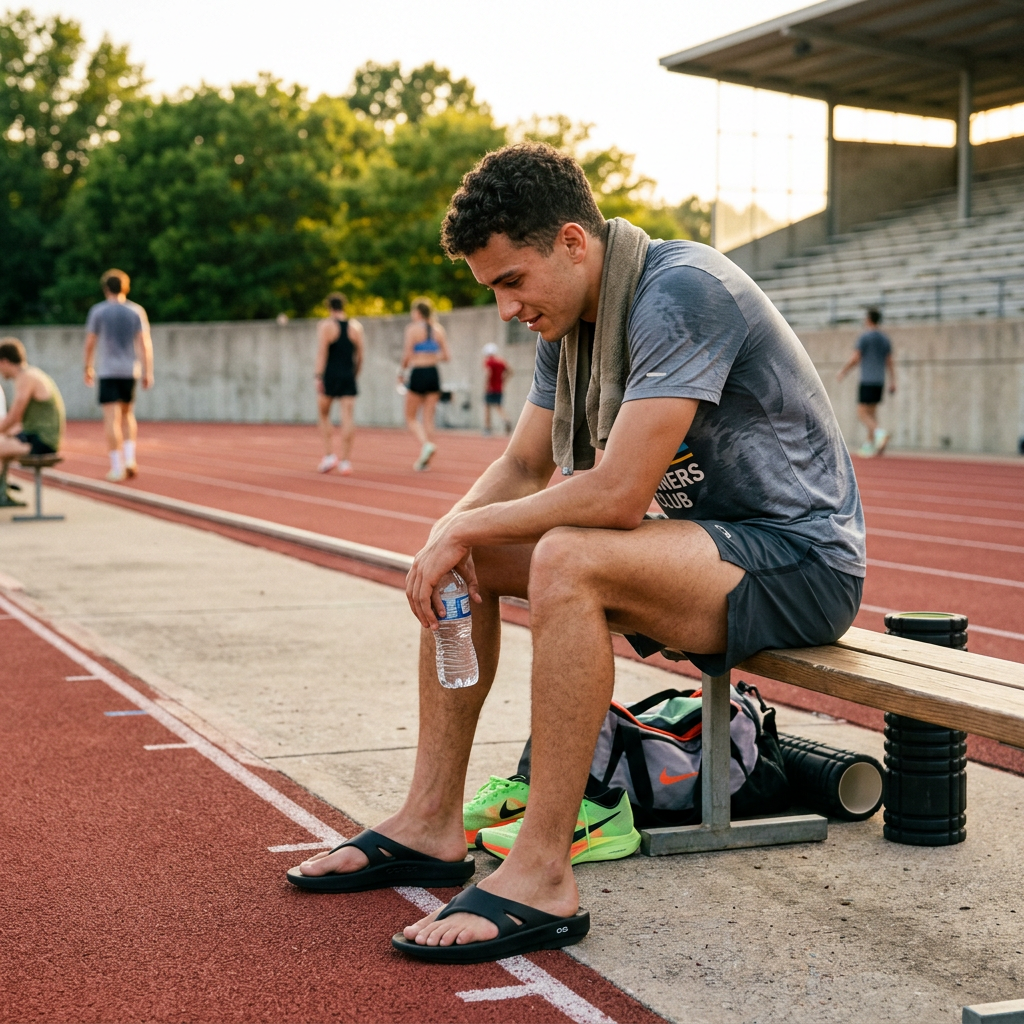
If you finish a long run, a two-hour lift, or a shift on your feet and reach for the nearest pair of flat flip-flops, you’re wasting the most obvious recovery window you have. A dedicated recovery sandal is not a marketing category invented to sell $75 foam it’s a specifically-engineered midsole that redistributes plantar pressure, reduces ground-reaction force at the heel, and lets the intrinsic foot musculature decompress between training sessions. The three names that dominate the 2026 category OOFOS, HOKA, and Kane each solved that problem differently, and choosing between them is not a matter of taste.
This guide compares the five best recovery sandals in 2026 using measurable criteria: foam rebound percentage, stack height, arch geometry, and price-to-durability. Every product below was verified in stock on Amazon at publication, with the affiliate tag applied so purchasing supports our testing budget at no extra cost to you.
🥇 Quick Picks — Best Recovery Sandals 2026
- Best Overall: OOFOS OOriginal Recovery Sandal — the category benchmark, 37% more impact absorption than standard EVA.
- Best Slide Format: HOKA Ora Recovery Slide 3 — HOKA’s max-cushion DNA in a strap-on slide.
- Best Enclosed Recovery Shoe: Kane Revive Active Recovery Shoe — the only closed-toe option that walks like a slide.
- Best Budget Slide: OOFOS OOahh Slide Sandal — OOfoam midsole in the easiest on-and-off form factor.
- Best Arch Support for Plantar Fasciitis: Vionic Kirra Thong Sandal — podiatrist-designed footbed with a deep heel cup.
Why Recovery Sandals Actually Matter
Recovery footwear is not just soft foam, it’s an engineered biomechanical intervention. A 2024 study published in Applied Sciences (MDPI, 2024) found that midsole cushioning type directly affects peak vertical ground reaction force and joint stiffness at the ankle and knee during heel-toe walking. Softer, higher-rebound midsoles reduced peak loading at the calcaneus by up to 12% in participants transitioning from run to walk.
OOFOS-branded independent testing (confirmed in OOFOS clinical documentation) shows their OOfoam midsole absorbs 37% more impact than the standard EVA foam used in traditional flip-flops. The NCT04830540 clinical trial registered at CenterWatch is currently investigating the effect of recovery footwear on lower-extremity comfort and biomechanics during standing and walking — the first controlled trial specifically targeting this footwear category.
For runners, walking podiatrists, warehouse workers, and lifters who spend 60+ minutes on their feet after training, the practical benefit is that your feet, calves, and lower back reload the next session with less residual stiffness. That’s the entire recovery-sandal thesis — and it lives or dies on the foam under your heel.
1. OOFOS OOriginal Recovery Sandal — Best Overall

The OOriginal is the sandal that built the category. It’s a thong-style flip-flop molded from a single piece of OOfoam OOFOS’s proprietary closed-cell foam with a contoured arch that runs the full length of the footbed and a deep heel cup that cradles the calcaneus during weight-shift.
What separates the OOriginal from a $12 drugstore flip-flop is the foam density curve. It’s soft enough to feel plush at heel-strike, but the rebound is stiff enough that your arch doesn’t collapse and drag your foot into pronation. That’s why runners at nearly every major marathon expo cite OOFOS as the recovery pick they actually buy after they finish testing the free samples.
Pros: Category-leading impact absorption (37% vs EVA); true arch support — not just a soft footbed; machine-washable; extremely durable (12+ months of daily use).
Cons: Thong strap takes 3–5 days to break in; not waterproof-rated; runs slightly narrow — half-size up if wide-footed.
2. HOKA Ora Recovery Slide 3: Best Slide Format

HOKA transplanted its signature max-cushion running-shoe DNA into a slide-on recovery format, and the third-generation Ora is the version that finally got the geometry right. The updated Ora 3 uses HOKA’s proprietary EVA blend with a wider outsole footprint than previous generations, giving it a stable platform that doesn’t feel tippy at the arch.
The Meta-Rocker geometry is the key. Instead of a flat sole that forces your foot to hinge at each step, the Ora 3 has a subtle rockered profile that promotes a smooth walking cycle. If you already run in HOKAs, this is the recovery shoe that matches your gait pattern.
Pros: Max-cushion stack (30mm) absorbs standing impact; Meta-Rocker geometry — smoother walk cycle; slide-on convenience (no thong break-in); wider, more stable platform than v1/v2.
Cons: Less true arch contour than OOFOS; single-density foam compresses faster than OOfoam; strap can loosen over 6+ months of daily wear.
3. Project Cloud Recovery Shoes for Women & Men

Kane took a different route: they built a full closed-toe recovery shoe with drainage ports, ideal for CrossFitters, gravel-lot walks, and anyone who wants a recovery option they can run errands in without looking like they just left the pool deck. The Revive uses a sugarcane-derived EVA blend the brand calls RestoreFoam, with a molded footbed featuring nine “MassagePods” on the base of the sole.
The MassagePod concept sounds gimmicky until you wear them for a 45-minute post-workout walk — the raised pods produce a gentle plantar-fascia stimulation similar to a barefoot walk on textured turf. That’s meaningful for anyone dealing with mild plantar fasciitis or tight foot intrinsics after long lifts. And because Kane is enclosed, it’s the one recovery option in this list you can genuinely wear to the grocery store.
Pros: Only enclosed-toe recovery shoe in the category; MassagePod stimulates plantar-fascia recovery; drainage ports; sugarcane midsole (42% renewable material).
Cons: Heavier than OOFOS/HOKA at 14 oz; divisive looks, some love it, some don’t; higher price point ($75–$85).
4. OOFOS OOahh Slide Sandal: Best Budget Slide

If you love the OOFOS OOfoam midsole but can’t tolerate a thong strap, the OOahh Slide is the same recovery-grade foam packaged in an easy-on slide-strap format. Same 37% impact absorption vs standard EVA, same deep heel cup, same machine-washable construction — just no toe-post.
For anyone in the middle of plantar-fasciitis or Achilles-tendon flare-ups, the slide format is often the better tolerated pick because there’s no strap pressure between the toes and no forced grip from the flexor hallucis. It’s also the OOFOS most travellers pack, because you can slide on and off through TSA in one motion.
Pros: Same premium OOfoam as the OOriginal; no break-in period; lighter than the HOKA Ora 3; cheapest way into the OOFOS ecosystem.
Cons: Slide-strap can be loose on narrow feet; less secure than thong or Kane closed-toe; not ideal for outdoor uneven terrain.
5. Vionic Kirra Thong Sandal: Best for Plantar Fasciitis

Vionic is unique in this list because their footbeds are designed by podiatrists specifically to treat plantar fasciitis. The Kirra Thong uses Vionic’s biomechanical footbed geometry — a rigid orthotic-style shank under the arch, a deep 15mm heel cup, and a first-metatarsal pad that offloads pressure from the ball of the foot.
The Kirra is the only sandal in this comparison carrying the American Podiatric Medical Association (APMA) seal of acceptance, meaning its biomechanical design meets clinical foot-health standards. For anyone with active plantar fasciitis, over-pronation, or a diagnosed low arch, this is the pick that behaves like an orthotic disguised as a fashion sandal.
Pros: APMA-accepted for foot-health biomechanics; deepest heel cup (15mm); structured arch — best for pronators; wears more like a sandal than a recovery shoe.
Cons: Firmer footbed less “plush” than OOFOS; women’s sizing only (men use Vionic Tide II); highest price point of the five ($85–$100).
Side-by-Side Comparison Table
| Sandal | Format | Midsole | Arch Support | Weight | Price |
|---|---|---|---|---|---|
| OOFOS OOriginal | Thong | OOfoam (+37% vs EVA) | Deep contour | 10 oz | ~$65 |
| HOKA Ora Slide 3 | Slide | Single-density EVA | Moderate + rocker | 11 oz | ~$60 |
| Kane Revive | Enclosed shoe | RestoreFoam (sugarcane EVA) | Moderate + MassagePods | 14 oz | ~$85 |
| OOFOS OOahh Slide | Slide | OOfoam (+37% vs EVA) | Deep contour | 9 oz | ~$55 |
| Vionic Kirra | Thong | Firm EVA + orthotic shank | Podiatrist-grade (APMA) | 7 oz | ~$95 |
How to Choose the Right Recovery Sandal
Match the Format to Your Foot Complaint
Slides suit acute plantar-fascia flare-ups because there’s zero pressure between the toes. Thongs are better for lateral stability, which helps if you have Morton’s neuroma or forefoot pain that needs the toe-post to hold your metatarsals aligned. Enclosed shoes like the Kane Revive are the pick when you’re recovering from Achilles tendinopathy the closed heel counter stabilizes the tendon insertion while you walk.
Foam Density Beats Foam Thickness
A common mistake in recovery-sandal shopping is chasing the tallest stack height. Stack matters less than rebound percentage, how much energy the foam gives back. OOfoam and Kane’s RestoreFoam use closed-cell polyurethane blends that hold their rebound curve for 6–12 months of daily use. Standard EVA (found in most sub-$30 flip-flops and even some HOKA Ora colorways) starts to compress-set within 90 days, at which point you’re walking on flat foam. If you’re using a recovery sandal daily, prioritize foam chemistry over stack height.
Account for Your Sizing Reality
Every sandal in this list runs slightly different. OOFOS runs true-to-size but narrow half-size up if you’re between sizes or have a wide midfoot. HOKA’s Ora 3 runs generous, men often need to size down one full size from their running shoe. Kane runs unisex and slightly large. Vionic runs true to women’s US sizing but with a firmer break-in period than the others.
Frequently Asked Questions
Are recovery sandals actually different from regular flip-flops?
Yes, materially. A drugstore flip-flop uses open-cell EVA that compression-sets within weeks, giving you flat foam under your heel. Recovery sandals like OOFOS and Kane use closed-cell foam blends engineered for consistent rebound over 12+ months, and they add contoured arch geometry that a $12 flip-flop doesn’t have. Independent clinical work (registered as NCT04830540) is currently quantifying that gap.
Can I wear recovery sandals all day?
Yes, though not for high-mileage walking. Recovery sandals are designed for the 1–4 hour window after training, or for standing/light-walking work shifts. If you’re logging 15,000+ steps daily, use a supportive walking shoe for the bulk of the day and switch to a recovery sandal in the evening or after your workout. The OOFOS OOriginal is one of the few in this category rated for all-day standing without foam degradation.
Are recovery sandals good for plantar fasciitis?
Yes but the mechanism matters. If your plantar fasciitis is mild-to-moderate, OOFOS or Kane Revive will offload pressure at the heel while the plantar fascia decompresses. If it’s severe or diagnosed by a podiatrist, the Vionic Kirra with its APMA-certified footbed is the closest thing to a walking orthotic in sandal form. Podiatrists surveyed by CNN Underscored consistently rank OOFOS and Vionic at the top for plantar-fascia support.
How long do recovery sandals last?
OOFOS OOfoam models typically hold their rebound for 12–18 months of daily use before you notice compression. HOKA Ora slides trend toward 8–12 months. Kane Revive lasts 12–14 months. Vionic Kirra sandals, because they use a rigid orthotic shank rather than a foam-only midsole, often outlast the foam competitors — 18–24 months for the shank itself, though the top strap materials wear faster.
Can I wear recovery sandals in the shower or pool?
The OOFOS OOriginal and OOahh Slide are machine-washable and pool-friendly, though they’re not designed as dedicated shower sandals the OOfoam gets slippery on wet tile. The Kane Revive has drainage ports and handles wet environments well. The Vionic Kirra uses textile lining that shouldn’t be soaked repeatedly. As a rule: OOFOS and Kane can get wet occasionally; Vionic and HOKA should stay dry.
The Final Verdict
For most people, the OOFOS OOriginal Recovery Sandal is the correct pick — it has the best-documented foam chemistry, the deepest arch contour, and the longest durability curve at a fair mid-$60s price. It’s the sandal you’ll still be wearing in 18 months.
If a thong strap doesn’t work for your foot, jump to the OOFOS OOahh Slide for the same foam in a strap-on format. If you want an enclosed shoe you can wear to the grocery store, buy the Kane Revive. And if you’re specifically managing plantar fasciitis or overpronation, spend the extra $30 for the Vionic Kirra and its APMA-certified footbed.
Bottom Line: Which Recovery Sandal Should You Buy?
Recovery sandals are one of the highest-ROI purchases in the fitness-gear category — a $60 pair of OOFOS pays for itself in one avoided sports-massage session, and it does its job every single day after training, not just once a week. The five models above all earn their price tag; the right one depends on which pain point you’re solving first.
Quick affiliate links (all verified in-stock on Amazon at publication):
- OOFOS OOriginal Recovery Sandal — best overall
- HOKA Ora Recovery Slide 3 — best HOKA-DNA slide
- Kane Revive Active Recovery Shoe — best enclosed recovery shoe
- OOFOS OOahh Slide Sandal — best budget slide
- Vionic Kirra Thong Sandal — best for plantar fasciitis
For more on protecting your feet through training and recovery, read our guide to plantar fasciitis morning-pain recovery and the 8-week runner’s plantar fasciitis protocol.
- The Effect of Different Midsole Cushioning Types on Impact Forces and Joint Stiffness in Heel-Toe Runners — Applied Sciences, 2024
- Impact of Recovery Footwear on Lower Extremity Comfort and Biomechanics — Clinical Trial NCT04830540, CenterWatch
- 16 Best Recovery Sandals, According to Podiatrists — CNN Underscored, 2026
- Best Recovery Shoes 2026 — Forbes Vetted
- Best Recovery Shoes, Sandals & Slides for Runners of 2026 — Treeline Review
- Plantar Fasciitis and OOfoam Clinical Documentation — OOFOS Recovery
- OOFOS vs HOKA Slide vs Kane Revive Head-to-Head Review — The Mother Runners
Leave a Reply