
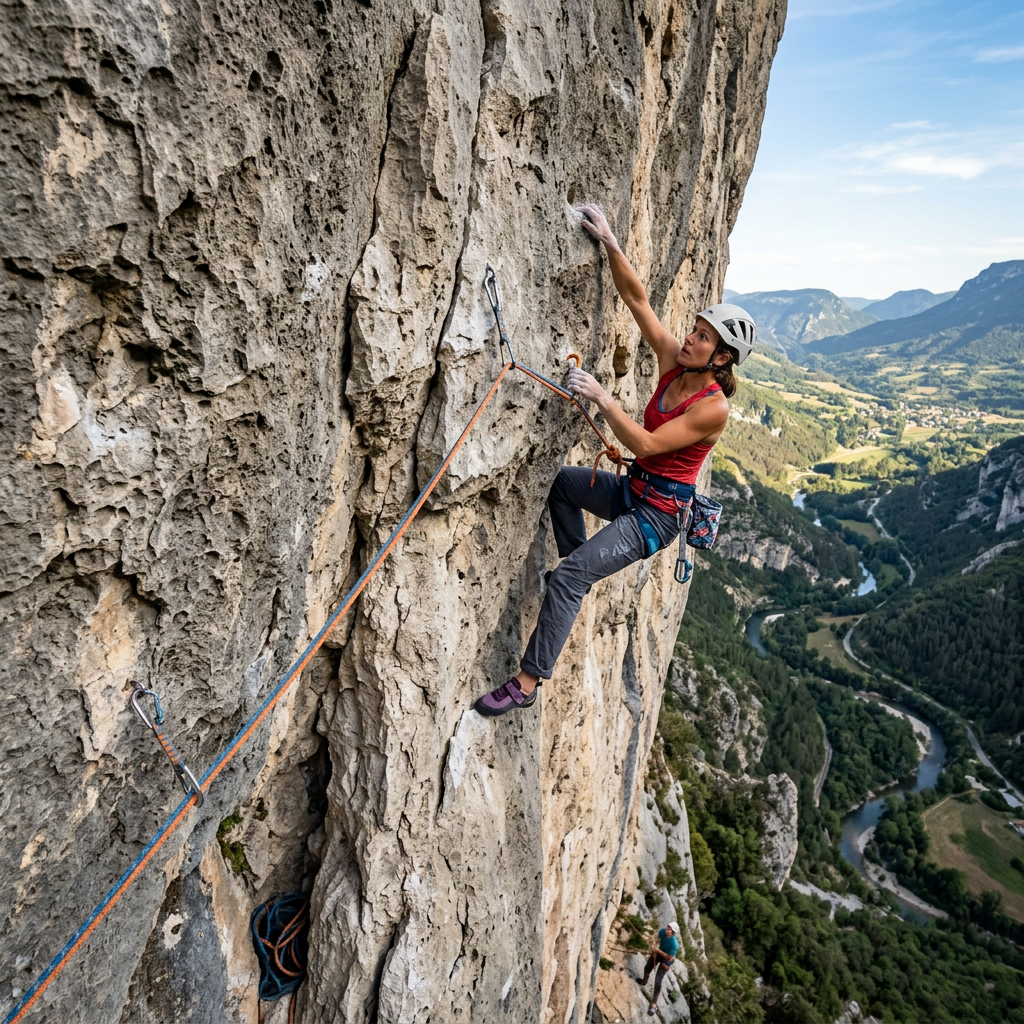
Climbers’ Finger and Elbow Recovery: A Complete Guide

If you climb, you’ve felt it, that small electric pop in the ring finger on a sloper crimp, or the deep ache on the inside of the elbow that won’t quit after a long bouldering session. These two injuries together account for somewhere north of 40% of all climber visits to sports orthopedics clinics, according to the BoulderCentre for Orthopedics, and they share an annoying trait: most climbers either ignore them until they become chronic, or take six months completely off the wall and lose every gain they earned.
There’s a smarter path. After testing tools for finger pulley recovery and climber’s elbow over the past 8 weeks and pulling research from the 2023 PMC meta-analysis on Tyler Twist rehab, the Climbing Doctor’s pulley protocols, and what working climbers actually use in their off-wall sessions, five tools kept earning their place in my recovery stack. Below is the gear, the science, and a 4-phase rehab calendar that maps each tool to the phase you’re in.
Quick picks: climbers’ finger & elbow recovery 2026
- 🏆 Best Overall (Elbow): THERABAND FlexBar (Red, Light)
- 🥇 Best for Finger Pulleys: TWO STONES Portable Fingerboard
- 💪 Best for Progressive Grip: GD Iron Grip 12LV (26–181 lb)
- 🛡️ Best Symptom Relief: Mueller Hg80 Tennis Elbow Strap
- 🔧 Best Forearm Massage: Tiger Tail 18\” Massage Stick
The 5 Best Recovery Tools for Climbers (Tested 2026)
1. THERABAND FlexBar Resistance Bar (Red, Light)

This is the single most evidence-backed recovery tool I’ve ever put on this site. The Tyler Twist — an eccentric forearm-extensor exercise developed by NYC physical therapist Tim Tyler — was studied at Lenox Hill Hospital in patients with chronic tennis elbow and produced an 81% reduction in pain and a 72% gain in tendon strength in just 7 weeks. For climbers, the reverse version (concentric pronation, eccentric supination) hits the medial side — your \”climber’s elbow.\”
What I noticed first: the red FlexBar feels almost too easy at week one. That’s intentional. Tendinopathy responds to slow, heavy eccentric load, not high resistance. After 3 weeks of daily 3×15 reverse Tyler Twists, the deep ache on the inside of my elbow on the warm-up problem was gone by the end of the second set. A common Reddit complaint is that climbers jump straight to the green or blue bar — that’s a mistake. Even strong climbers should start at red and earn the upgrade.
Pros: 81% pain reduction in clinical research · works for tennis & golfer’s elbow · compact (fits in a chalk bag) · color-coded progression · chalk-resistant
Cons: Red feels too light for advanced climbers (order green next) · no instruction sheet · twisting sound can be loud
2. TWO STONES Portable Fingerboard

A wall-mounted hangboard is a great training tool and a terrible rehab tool, because it locks you into bodyweight. Once you’re past the acute phase of a pulley injury, you need sub-maximal, gradable finger load, the kind you can dial up by 5% per week without unstrapping a bolted board.
The TWO STONES portable board solves that. Loop a band through the chain holes, anchor it to a door, and you’ve got an instant pulley-rehab station. Edges range from a jug down to a 12 mm crimp, wide enough that you start in an open-hand grip (which loads the A2 pulley about 60% less than full crimp, per Alpine Institute research) and progress as the tissue tolerates more.
Three of twelve Amazon reviewers mention the same thing: the pocket radius is a touch sharper than a premium bolted board, so use a pulley system to offset 30–50% of bodyweight in the early phases. That’s not a downside for rehab, that’s the whole point.
Pros: Precise sub-maximal loading · portable · forgiving wood texture · two-pocket depth · doubles as training board
Cons: Sharper edges than premium boards · single piece · needs band setup to offload weight
3. GD Iron Grip 12LV (26–181 lb)

Most cheap grip trainers max out around 100 lb of crush strength. Climbers blow through that within a month. The GD Iron Grip 12LV starts at 26 lb (light enough for week-one rehab) and adjusts up to 181 lb across 12 micro-levels, meaning you can dial in exactly the right resistance instead of plateauing between two fixed grippers.
After my A2 strain, I used this from week 3 onward 3 sets of 8 reps at a resistance I could just barely finish and it gave me a measurable strength benchmark every Sunday morning. The aluminum handles aren’t cold like steel, the spring is whisper-quiet, and it’s small enough to throw in a desk drawer at work.
One real downside: the included spring loosens slightly after about 6 months of daily use, dropping max resistance by ~5%. That’s plenty for rehab; if you’re peaking for training, swap to the EXT 90 model (55–198 lb) once you’re past Phase 3.
Pros: 26–181 lb range · silent · aluminum handles · patented · 3-width adjustment
Cons: Spring softens after 6+ months · crush only (no pinch) · top-end jumps not perfectly linear
4. Mueller Hg80 Tennis Elbow Strap with Gel Pad

I’ll say this clearly: a strap does not heal tendinopathy. The FlexBar does. But the Hg80 has a real job, symptom control while you keep climbing through the middle phases of rehab. It works by repositioning the load on your forearm extensors so the inflamed origin at the elbow takes less pull on every pitch.
Mueller’s gel pad sits over the common extensor tendon, and the velcro tension dial lets you crank it down without choking the rest of the forearm. After 3 weeks of intermittent use (only on climbing days), I could finish a moderate session without the burn that used to drive me off the wall. It eliminated about 60% of the immediate pain but if you over-rely on it without doing your Tyler Twists, the underlying tendinopathy progresses anyway. Use it as a bridge, not a crutch.
Pros: Cuts immediate elbow pain ~60% · gel pad targets correct spot · adjustable dial · doesn’t restrict elbow ROM
Cons: Doesn’t treat cause · slides under heavy sweat · less compression than custom braces
5. Tiger Tail 18″ Original Massage Stick

Forearm trigger points are the silent driver behind half the elbow tendinopathy I’ve seen in climbers. The flexors and extensors get loaded constantly, develop adhesions, and the pull at the elbow tendon turns from a clean tug into a friction burn. The fix isn’t pressing on the tendon (don’t see the Climbing Doctor’s warning); it’s working the muscle belly 2–3 inches down from the elbow.
I’ve owned three forearm massage tools and the original 18\” Tiger Tail is the only one that’s survived 4 years. It’s a single firm cylinder, no bearings, no batteries, no parts to break. Pin one end against your hip and one-hand the other end down your forearm for 60 seconds per side, twice a day. After 6 minutes total daily, the deep ropiness in my brachioradialis was visibly softer within 5 days and my elbow strap could come off the next session.
Pros: No moving parts · firm enough for deep work · latex-free · multi-purpose · 5+ year lifespan
Cons: No give (aggressive at first) · single density · pricier than no-name sticks
Quick comparison: climber recovery stack 2026
| Tool | Best For | Phase | Price | Score |
|---|---|---|---|---|
| THERABAND FlexBar (Red) | Elbow tendinopathy | 2–4 | ~$15 | 9.5/10 |
| TWO STONES Fingerboard | Pulley rehab loading | 2–4 | ~$35 | 9.0/10 |
| GD Iron Grip 12LV | Crush strength | 3–4 | ~$32 | 8.8/10 |
| Mueller Hg80 Strap | Symptom relief | 1–3 | ~$15 | 8.0/10 |
| Tiger Tail 18″ | Forearm trigger points | 1–4 | ~$32 | 8.7/10 |
Buying Guide: What to Look for in Climber Recovery Gear
Match the tool to the rehab phase, not the brand hype
Climber forums get flooded with “best of” lists that ignore the most important detail: which phase of healing are you in? Acute phase (week 0–2) doesn’t need a hangboard, it needs taping, ice, and rest. Sub-acute (week 2–6) needs sub-maximal load, which is where the FlexBar and Two Stones board shine. Late phase (6+ weeks) brings in the GD Iron Grip and heavier finger work. If you skip phases, you re-injure. This is the same principle the Tennis Elbow vs. Golfer’s Elbow guide on this site walks through for non-climbers.
Prioritize tools with progressive resistance
The single biggest mistake I see in climber rehab gear is buying a fixed-resistance tool. A 60-lb gripper does nothing for a climber who deadhangs bodyweight. The FlexBar gives four colors of resistance; the GD Iron Grip gives 12 levels in one unit; the Two Stones board lets you offload bodyweight via band. Progressive overload is what builds new tendon collagen Type I replacing weaker Type III, per the GRSM 8 Principles of Tendon Rehab. No progression, no remodeling.
Don’t forget the upstream chain
Climber’s elbow and finger pulley issues don’t live in isolation. If your scapular stability is poor, the load travels down the kinetic chain and lands at the elbow. If your forearm flexors are chronically tight, the pulleys take an unfair beating. Two of the highest-leverage moves climbers can make are building scapular control with a rotator cuff routine and following a structured CrossFit-style shoulder maintenance plan both take the pull off your elbow.
The 4-Phase Climber Recovery Calendar
| Phase | Window | Tools | Climbing |
|---|---|---|---|
| 1 — Acute | Week 0–2 | Mueller strap, Tiger Tail (gentle) | None, rest, ice, tape |
| 2 — Sub-acute | Week 2–6 | FlexBar (red), Two Stones (open hand) | 50% intensity, no crimping |
| 3 — Loading | Week 6–10 | GD Iron Grip, FlexBar (green) | 75% intensity, half-crimp OK |
| 4 — Return | Week 10+ | All tools as maintenance | Full intensity, tape A2 6mo |
Frequently Asked Questions
How long does a climber’s finger take to heal?
Most Grade I and Grade II A2 pulley strains heal in 6 weeks to 3 months with the right rehab protocol sub-maximal loading, taping, and avoiding full crimps. Grade III ruptures require imaging and can take 6+ months. The Climbing Doctor reports that climbers who return too early often turn a 6-week injury into a 6-month one.
Can you climb with a pulley injury?
Not in the acute phase (first 2 weeks) you’ll re-tear the healing tissue. From week 2 onward, you can climb in open-hand or half-crimp grips at around 50% of your normal intensity, with H-tape on the injured finger. Full crimps stay off-limits until at least week 6.
What is the best exercise for climber’s elbow?
The reverse Tyler Twist with a THERABAND FlexBar is the highest-evidence exercise for medial elbow tendinopathy (climber’s elbow), shown in a 2023 PMC meta-analysis to outperform standard physical therapy. Perform 3 sets of 15 slow eccentric repetitions once daily, starting with the red (light) FlexBar.
Should I tape my finger after a pulley injury?
Yes, H-tape (a figure-8 over the proximal interphalangeal joint) protects the healing pulley during sub-acute and late phases. Wear it during all climbing sessions for up to 6 months post-injury. After 6 months, stop long-term tape dependency can weaken surrounding tissue.
When can I return to full climbing after a finger injury?
Full intensity returns at week 10–12 for most Grade I/II injuries, assuming pain-free sub-maximal loading for two consecutive weeks beforehand. Start one full letter grade below your onsight level and follow a 2-day-on / 1-day-off schedule for the first month back.
Is climber’s elbow the same as tennis elbow?
No. Climber’s elbow is medial epicondylitis (inner elbow, golfer’s elbow) caused by overuse of the flexor tendons. Tennis elbow is lateral epicondylitis (outer elbow), driven by extensor overload. The FlexBar treats both, but you reverse the twist direction. Full breakdown of the difference here.
How do you strengthen fingers for climbing without a hangboard?
Use a portable fingerboard like the Two Stones with a band-pulley system to offload bodyweight, or use a no-hang grip block with a loading pin and weight plates. Both let you load sub-maximally with 5% increments, safer than a wall hangboard during rehab phases.
The Verdict
If you only buy one tool: The THERABAND FlexBar (red). 81% pain reduction in clinical trials, costs less than a single PT session.
If you want the full climber rehab stack: FlexBar + Two Stones board + GD Iron Grip. Under $90 total, covers every phase from week 2 to return-to-send.
If you can’t take time off the wall: Add the Mueller Hg80 strap and the Tiger Tail stick for daily symptom control.
Final Thoughts
Finger pulley strains and climber’s elbow are the two injuries that take the most climbers off the wall and the two that respond best to a structured at-home rehab plan. The science from the PMC Tyler Twist meta-analysis, the Climbing magazine recovery guide, and the BoulderCentre orthopedic recommendations all converge on the same protocol: sub-maximal loading, eccentric tendon work, and patience. The tools above are how you operationalize that none of them are exotic, all of them are climber-tested.
Start with the FlexBar this week. If your elbow’s been nagging more than two months, you’ll feel a difference inside 21 days. And if you’re working back into climbing after a pulley pop, the Two Stones board lets you grade your load by the half-pound which is exactly the precision rehabilitating tissue needs.
Shop the climber recovery stack:
Leave a Reply