
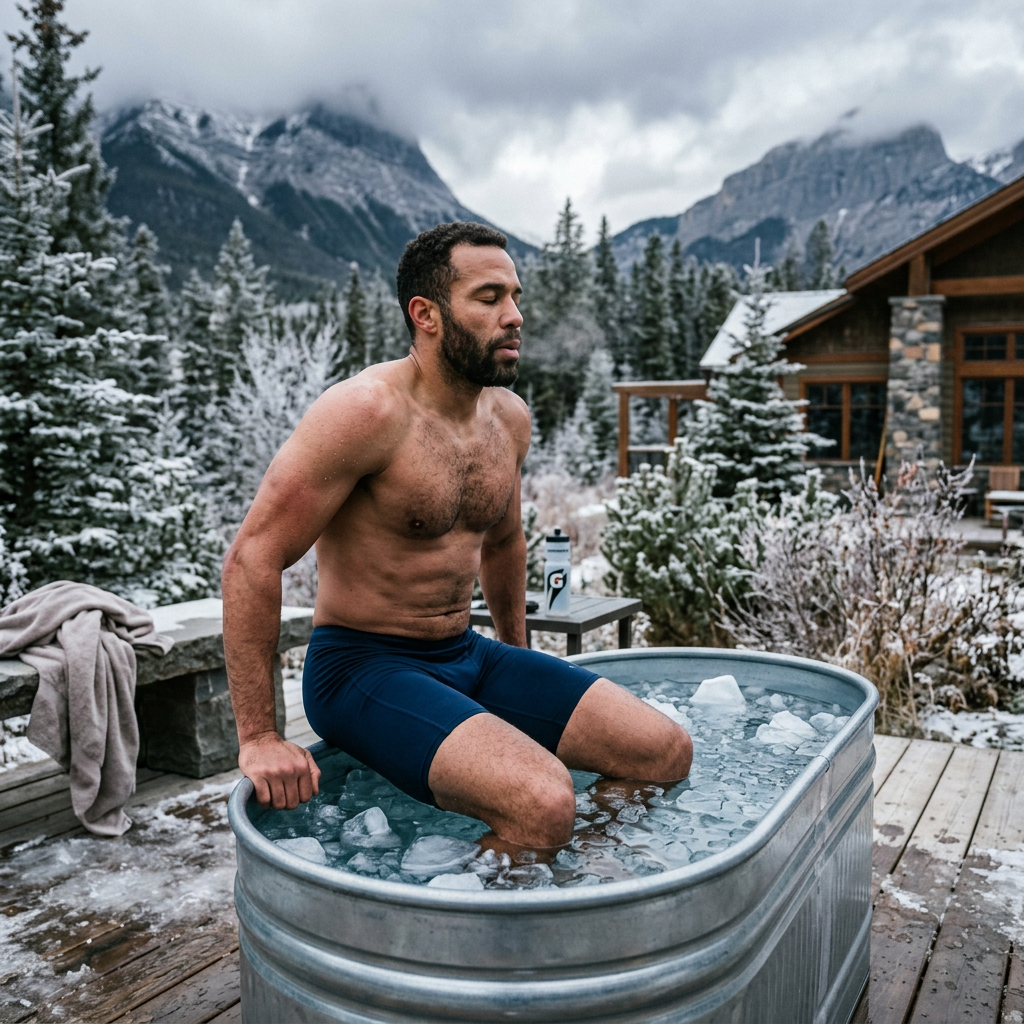

Walk into any gym in 2026 and you’ll hear the same conversation: cold plunge vs. ice bath vs. cryotherapy which one is actually worth your money? Influencers swear by sub-zero chambers. Pro athletes drop $10,000+ on home plunges. Meanwhile, your cousin keeps shoving bags of ice into his bathtub and claims he sleeps like a baby afterward.
So who’s right? The short answer: they all work but for very different reasons, at very different price points, and with very different commitment levels. This guide breaks down what each cold therapy method really does to your body, the research behind it, and the five best in-stock products on Amazon to help you actually pull the trigger this year.
If you’re new to cold exposure, start with our Active Recovery vs. Complete Rest guide and our post-workout recovery routine breakdown for context on where cold therapy fits in.
🥶 Quick Picks: Top 5 Cold Therapy Tools
- Best Overall Ice Bath Tub: The Cold Pod 88-Gallon Tub
- Best Large-Capacity Plunge: NAICID 120-Gallon Cold Plunge Tub
- Best At-Home Cold Plunge System: AS ColdPlunge 1/3 HP Water Chiller
- Best Targeted Cryotherapy: Aircast Cryo/Cuff Knee Cold Therapy
- Best Cold Plunge Accessory: XANGNIER Ice Bath Thermometer + Timer
What’s the Difference Between Cold Plunge, Ice Bath & Cryotherapy?
The three terms get tossed around interchangeably, but the science (and the experience) is meaningfully different. Here’s the no-nonsense breakdown:
Ice bath — the OG. You fill a tub with cold water, dump in 20–40 lbs of ice, and submerge yourself for 5–15 minutes. Temperature usually lands between 50–59°F. Cheapest entry point, no electricity needed, and it’s been studied for decades. According to a 2012 Cochrane Review of 17 trials, cold water immersion (CWI) significantly reduces delayed onset muscle soreness (DOMS) in the 24–96 hours after intense exercise.
Cold plunge — the modern upgrade. Same idea as an ice bath, but the water is held at a precise temperature (usually 39–55°F) by a built-in chiller. No ice, no mess, just step in and go. Cold plunges remove the biggest barrier to consistency: setup friction. The downside? They cost real money anywhere from $700 (DIY chiller + tub) to $15,000 (turnkey systems).
Cryotherapy, typically refers to whole-body cryotherapy (WBC) chambers that blast you with -200°F nitrogen vapor for 2–3 minutes. The catch: real WBC chambers cost $40,000+ and aren’t a home option for 99% of people. The “at-home cryotherapy” you’ll see on Amazon usually means localized cryo a circulating ice-water cuff or pad that targets one body part. It’s clinically used in post-surgical recovery and is endorsed by sources like Cedars-Sinai for inflammation control.
Here’s the honest 2026 verdict before we dive into picks: full-body cold immersion (ice bath or cold plunge) gives you the most bang for your buck for general recovery, mood, and metabolic benefits. Localized cryo wins for specific joint pain or post-injury work. We’ve covered all three categories below.
1. The Cold Pod 88-Gallon Ice Bath Tub
Price: ~$80–$110 · Check Price on Amazon →

The Cold Pod is the most-recommended budget ice bath in 2026 for one reason: it nails the basics. The 88-gallon capacity comfortably fits adults up to 6’5″, the multi-layered insulation (PVC inner, pearl foam middle, nylon outer) holds temperature for hours, and setup takes under 5 minutes with the included pump. It’s the tub I’d hand to a friend who wants to start ice bathing this weekend without overthinking it.
What sets it apart from cheaper knockoffs is the included UV-reflective cover leave it on between sessions and your water stays cold significantly longer, meaning you use less ice. Reviewers consistently report it survives daily outdoor use through full summers without leaks or seam failures.
✅ Pros
- Includes UV-reflective cover (rare at this price)
- Holds cold water 6–10 hours when covered
- Tall enough for full-shoulder submersion
- Folds compact for off-season storage
- Drain plug + extension hose included
❌ Cons
- No built-in chiller — you’ll need ice
- Pump can take effort to seat poles
- Needs flat, sheltered placement
2. NAICID 120-Gallon Cold Plunge Tub
Price: ~$110–$140 · Check Price on Amazon →

If you’re tall, broad-shouldered, or just want to fully submerge with knees bent comfortably, the NAICID 120-gallon (also branded KILEEP on some listings) is the move. At 29.5″ tall and 30″ in diameter, it’s the largest portable tub in this guide, and the 5-layer insulation system holds water temperature meaningfully better than thinner competitors.
The setup uses 6 reinforced poles instead of the typical 4, which translates to noticeably better wall stability important when you’re stepping in and out without spilling water everywhere. The bottom drain valve is a quality-of-life upgrade most cheap tubs skip.
✅ Pros
- Largest portable capacity in this guide
- 6-pole frame is unusually stable
- Free protective cover included
- Fills in ~12 minutes from a garden hose
- Sturdy enough for outdoor year-round use
❌ Cons
- Heavier — not as travel-friendly
- 120 gallons = more ice per session
- Branding inconsistency between sellers
3. AS ColdPlunge 1/3 HP Water Chiller
Price: ~$700–$900 · Check Price on Amazon →

This is where you stop dragging bags of ice from the gas station. The AS ColdPlunge 1/3 HP chiller is the most cost-effective entry point in 2026 for a true automatic cold plunge the kind that holds 39°F all day, every day, with no ice required. Pair it with the NAICID or Cold Pod tub above and you have a turnkey home plunge for under $1,000 instead of $5,000+.
It runs at 30–45 dB (about as loud as a fridge), uses an external 20-micron filter to keep water clean, and has an LED touchscreen so you can dial temperature anywhere from 37°F to 105°F. Plug-and-play 110V no electrician needed. Real talk: at this price you trade a slightly louder unit and basic app-less interface for a $4,000+ savings versus turnkey “luxury” plunges.
✅ Pros
- True 39°F temperature hold — no ice needed
- Pairs with any tub (Cold Pod, NAICID, etc.)
- External filter keeps water clean weeks at a time
- Cooling and heating in one unit
- 1-year warranty + responsive support
❌ Cons
- Significant upfront investment
- No app / smart-home integration yet
- Best in a garage / shaded outdoor space
4. Aircast Cryo/Cuff Knee Cold Therapy System
Price: ~$120–$170 · Check Price on Amazon →

If your goal is post-surgery rehab, joint inflammation, or targeted relief for one body part not full-body recovery this is the at-home cryotherapy answer. The Aircast Cryo/Cuff is the same system orthopedic clinics actually issue patients after ACL and meniscus surgery. It combines focal compression with cold via a gravity-fed cooler (no motor, no power needed) that delivers 6–8 hours of consistent cold therapy from one fill.
The universal-fit knee cuff works on either leg, and Aircast sells dedicated cuffs for ankle, shoulder, hip, back, and elbow that all connect to the same cooler. The combination of cold + compression is what makes this clinically different from just slapping an ice pack on pressure helps reduce hemarthrosis (joint bleeding) and edema in a way passive cold can’t.
✅ Pros
- Clinically used in orthopedic recovery
- Compression boost vs. plain ice packs
- No batteries or electrical outlet required
- One cooler works with multiple body-part cuffs
- Quiet, hands-free, and travel-friendly
❌ Cons
- Targeted only — no whole-body benefit
- Pricier than a basic ice pack setup
- Manual ice refill every 6–8 hours
5. XANGNIER Ice Bath Thermometer + Timer
Price: ~$15–$25 · Check Price on Amazon →

If you’re going to plunge regularly, you need to know two things: what temperature is the water and how long have I been in here. The XANGNIER 2-in-1 floats on the water surface, displays temp in °F or °C with a backlit screen you can read with one half-frozen eye, and has a built-in countdown timer so you don’t have to wrestle a phone with cold-numb hands.
It’s IP67 waterproof, includes spare batteries, and the countdown alarm is loud enough to hear over your own heavy breathing. For under $25 it removes guesswork from your protocol and protocol is what makes cold therapy actually work. The widely-cited Huberman Lab cold-exposure protocol recommends 11 minutes of cold per week split across 2–4 sessions; you can’t dose that without a timer.
✅ Pros
- Combines thermometer + timer in one unit
- Backlit display readable in dim outdoor light
- °F/°C toggle
- Floats safely — no hardware to install
- Spare batteries included in box
❌ Cons
- Buttons can be fiddly with wet hands
- Not Bluetooth / app-connected
- Plastic shell — keep out from under your weight
Side-by-Side Comparison Table
| Product | Type | Price | Best For | Rating |
|---|---|---|---|---|
| The Cold Pod 88-Gal | Ice Bath | ~$80–110 | First-time plungers | ⭐⭐⭐⭐⭐ |
| NAICID 120-Gal | Ice Bath | ~$110–140 | Tall users / shared use | ⭐⭐⭐⭐½ |
| AS ColdPlunge Chiller | Cold Plunge | ~$700–900 | Daily ice-free plunge | ⭐⭐⭐⭐½ |
| Aircast Cryo/Cuff | Cryotherapy | ~$120–170 | Joint pain / post-surgery | ⭐⭐⭐⭐⭐ |
| XANGNIER Thermometer | Accessory | ~$15–25 | Protocol tracking | ⭐⭐⭐⭐½ |
How to Choose Your Cold Therapy Method
Start With Your Goal, Not Your Budget
The biggest mistake people make is buying a $5,000 plunge for general recovery they could’ve gotten from a $90 tub. Ask yourself: are you chasing full-body recovery and mood benefits (ice bath or cold plunge wins) or targeted joint relief (localized cryo wins)? Harvard Health notes the systemic anti-inflammatory and mood effects of CWI come from full submersion at the right temperature for 5–10 minutes — not from sitting in lukewarm water for an hour.
Be Honest About Consistency
An ice bath you use 3x a week beats a cold plunge that sits unused because the chiller intimidates you. Conversely, if you’ve been “meaning to do ice baths” for 6 months and haven’t because of the ice-hauling friction, that’s exactly the friction a chiller solves. Match the tool to your actual willingness to use it. Research from Frontiers in Physiology consistently shows that consistent 2–4 sessions per week drives most of the benefit — not one heroic 30-minute monthly plunge.
Don’t Skip the Thermometer
“Cold enough” is not a feeling it’s a temperature. Most CWI research lands the sweet spot at 50–59°F (10–15°C) for general recovery, with athletes sometimes pushing 39–50°F. Without a thermometer you’re guessing, and guessing usually means too warm to trigger the response or too cold and uncomfortable enough that you quit early. A $20 thermometer pays for itself in actual results.
Cold Therapy FAQ
How long should I stay in a cold plunge or ice bath?
For general recovery, aim for 2–5 minutes per session at 50–59°F. More-experienced plungers comfortable at 39–50°F can extend to 5–10 minutes. The often-cited Huberman protocol recommends ~11 minutes total per week split across 2–4 sessions. Don’t chase duration chase consistency.
Is cryotherapy actually better than an ice bath?
Despite the marketing, the research doesn’t show whole-body cryotherapy chambers as clearly superior to cold water immersion for athletic recovery. Water conducts heat ~25x more efficiently than air, so 50°F water hits your body harder than -200°F vapor. For most home users, an ice bath delivers 90% of the benefit at 1% of the cost.
Will cold plunging hurt muscle growth?
Maybe, if your only goal is hypertrophy. Studies suggest CWI immediately after heavy resistance training can blunt some muscle-building signaling. The fix: schedule your plunge at least 4–6 hours after strength workouts, or use it on cardio / off days. Recovery, sleep, and inflammation benefits remain intact.
Do I need a chiller, or is ice fine?
Ice works, it’s just labor. A 120-gallon tub typically needs 30–50 lbs of ice per session to hit 50°F, which adds up financially and logistically. A chiller is worth it once you’re plunging 4+ times per week or living somewhere ice is expensive/inconvenient. Otherwise, the Cold Pod or NAICID + a thermometer is more than enough.
Is at-home cryotherapy safe for self-treatment?
Localized cold therapy units like the Aircast Cryo/Cuff are widely used unsupervised post-surgery and are considered safe when followed with manufacturer guidance. Cedars-Sinai and most orthopedic clinics recommend max 20-minute applications with a barrier between the cuff and skin. Avoid if you have Raynaud’s, cold urticaria, peripheral neuropathy, or open wounds without doctor approval.
Final Verdict — Cold Plunge vs. Ice Bath vs. Cryotherapy
- Just want to try cold therapy without a $1,000 commitment? Get The Cold Pod 88-Gal + the XANGNIER thermometer. Total under $130, you’ll be plunging this weekend.
- Tall, broad-shouldered, or sharing with a partner? Upgrade to the NAICID 120-Gal for the extra space and stability.
- Plunging 4+ times a week and tired of ice runs? Add the AS ColdPlunge 1/3 HP chiller — the most affordable real cold plunge system in 2026.
- Recovering from surgery or fighting joint pain? Skip the tub entirely. The Aircast Cryo/Cuff is the targeted cryotherapy that orthopedic clinics actually issue.
The honest 2026 takeaway: Cold plunge vs. ice bath vs. cryotherapy isn’t really a competition — it’s three tools for three different jobs. Pick the one that matches your goal, commit to a real protocol, and you’ll feel a difference inside two weeks.
Conclusion: Build the Habit, Then Upgrade the Gear
Cold therapy is one of the rare recovery modalities where the cheapest entry point ($90 tub + $20 thermometer + $30 of ice) delivers nearly all of the proven benefits backed by peer-reviewed research. You do not need a $5,000 chiller to feel less sore, sleep better, and get the dopamine boost. You need a tub, water, ice, and the discipline to actually get in.
Start with The Cold Pod or NAICID, prove to yourself you’ll do it 3x a week for a month, then decide if a chiller upgrade earns its keep. If your need is targeted joint pain instead, the Aircast cryo system is the proven medical-grade answer. For more recovery breakdowns, see our guides on DOMS and 48-hour soreness, the post-workout recovery routine, and how sleep accelerates muscle recovery.
Quick Affiliate Link Recap:
- The Cold Pod 88-Gallon Ice Bath Tub — Best overall ice bath
- NAICID 120-Gallon Cold Plunge Tub — Best large-capacity plunge
- AS ColdPlunge 1/3 HP Water Chiller — Best at-home cold plunge system
- Aircast Cryo/Cuff Knee System — Best targeted cryotherapy
- XANGNIER Ice Bath Thermometer + Timer — Best protocol accessory
Last updated: April 28, 2026. Prices and availability subject to change. As an Amazon Associate, RollRestore earns from qualifying purchases.
Leave a Reply to Contrast Therapy (Hot/Cold): Does Alternating Really Speed Recovery In 2026? | RollRestoreRepeatCancel reply