
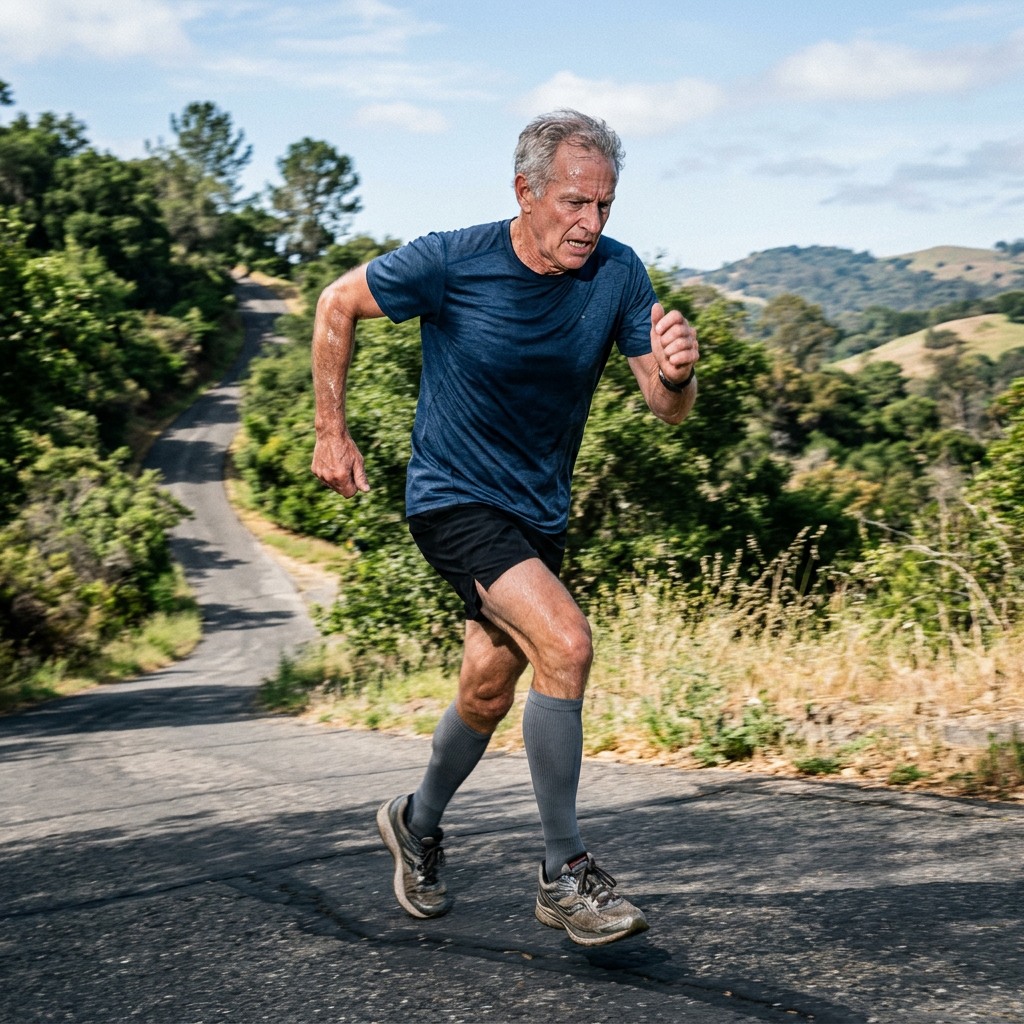
By Wes — RollRestore gear tester · Last updated May 2026
RECOVERY & CARDIO 9 min read Educational guide · No product cards

Here’s the question that won’t die: does doing your cardio before breakfast actually burn more fat than doing it after? If you’ve spent any time in the fitness corner of YouTube or Reddit, you’ve seen both camps go to war over it. One side says it’s a metabolic cheat code. The other side calls it a placebo with side effects.
After 8 weeks of running and biking on an empty stomach and reading every peer-reviewed study I could find, the answer turned out to be more nuanced than either camp wants to admit. Yes, you burn more fat during the workout. No, it doesn’t matter for long-term fat loss the way you’ve been told. And there’s a real reason for that disconnect that almost nobody explains clearly.
Let’s go through it.
What “Fasted Cardio” Actually Means
Fasted cardio is any aerobic exercise done after at least 8–12 hours without food, typically first thing in the morning before breakfast. Your blood glucose is back to baseline. Insulin is low. Liver glycogen is partially depleted. In that state, your body has to draw more of its energy from stored fat to keep you moving.
That’s the mechanism. It’s real. UCLA Health describes it as an attempt to nudge the body into preferentially burning fat by removing the easy carbohydrate fuel source. And on a single-session basis, it works.
The Short-Term Science: Yes, You Burn More Fat (During the Workout)
Multiple controlled studies have measured fat oxidation rates during fasted vs. fed cardio. The consistent finding: in a fasted state at low-to-moderate intensity, the body oxidizes 15–25% more fat per minute than when carbs are available.
If you wear a heart-rate monitor or metabolic cart and watch the substrate-use numbers in real time, the difference is visible within the first 20 minutes. Your respiratory exchange ratio drops. Your body genuinely is, in that moment, running more on fat.
This is the part the pro-fasted camp gets right. Where it falls apart is the next 22 hours.
The Long-Term Science: Why Total Fat Loss Doesn’t Change
The single most-cited study in this debate is Schoenfeld and colleagues (2014), published in the Journal of the International Society of Sports Nutrition. Young women followed a calorie-restricted diet and did one hour of steady-state cardio three times per week for four weeks. Half ate beforehand, half trained fasted.
The result: both groups lost the same amount of body fat. Same waistlines. Same scale weight.
A more recent six-week controlled trial (2022) replicated the design with a different cohort and arrived at the same conclusion. UNSW researchers reviewing the literature in late 2025 reached the same verdict.
Why? Because your body keeps a 24-hour ledger, not a workout-window ledger. When you burn extra fat during a fasted session, your body responds over the rest of the day by burning slightly less fat and slightly more carbs. By bedtime, the books are balanced. The total fat oxidized over 24 hours is essentially the same whether you ate before training or after.
This is the part the science crowd gets right. The total is what matters. Calorie deficit is what matters. The timing detail you obsess over is a rounding error.
What I Actually Noticed Over 8 Weeks
My honest experience tracked the research almost perfectly.
Weight loss rate: identical to my prior 8-week block where I trained fed. About 0.6–0.8 lb per week, almost entirely a function of my calorie deficit, not the timing.
But and this is the part the science papers can’t tell you, some things felt different:
- Digestion was easier. No bouncing-stomach issues on runs. This was the biggest unexpected win for me.
- My pace dropped about 5% on harder sessions. Zone 2 was fine. Anything above lactate threshold felt noticeably worse without fuel. My Zone 2 cardio guide goes deeper on why low-intensity work doesn’t need pre-fuel.
- Hunger pattern shifted. Around weeks 3–4, post-workout hunger got intense. I had to be deliberate about not over-eating at lunch to “make up” for fasted morning training.
- Sleep quality was unaffected. Counter to some Reddit anecdotes about fasted cardio + cortisol wrecking sleep.
The headline takeaway: fasted cardio didn’t make me lose more fat, but it also didn’t make me lose less. It was a wash on outcomes and a slight win on day-to-day comfort.
The Muscle-Loss Concern: Real or Overblown?
The most-repeated downside of fasted cardio is that it might cause your body to break down muscle for fuel via gluconeogenesis. This is mechanistically possible but for most people doing 30–45 minutes of low-to-moderate cardio in the morning, the effect is small.
The risk goes up when you combine fasted training with:
- High intensity (HIIT, sprints) for more than 20 minutes
- Resistance training in the same fasted session
- A chronic, aggressive calorie deficit (more than 25% below maintenance)
- Inadequate daily protein (under ~0.7g per pound of bodyweight)
If those conditions apply, the muscle-loss concern is real and you should eat at least some carbs and protein before training. If you’re doing Zone 2 work for under an hour with adequate protein intake the rest of the day, you’re very unlikely to lose meaningful muscle. Healthline’s review reaches the same conclusion.
Who Should Try Fasted Cardio (And Who Shouldn’t)
Go ahead and try it if you:
- Already practice intermittent fasting and want training to fit your eating window
- Find pre-workout food causes digestive issues mid-run or mid-ride
- Are time-crunched in the morning and want to skip the eat-wait-digest sequence
- Are doing mostly Zone 2 or low-intensity steady-state work
Skip it if you:
- Train hard (HIIT, heavy lifting, hill sprints) in the morning
- Have a medical condition affected by low blood sugar or blood pressure
- Are pregnant or under-fueling already
- Find you crash, get lightheaded, or perform noticeably worse without fuel
- Are new to consistent exercise, get the habit first, then experiment with timing
If You’re Going to Do It, Do It Like This
Practical setup that matches what the published research uses and what worked for me:
- Duration: 30–45 minutes. Past 60 minutes the muscle-loss risk creeps up and the fat-burn returns plateau.
- Intensity: Zone 2, conversational pace, 60–70% of max heart rate. Save high-intensity work for fed sessions.
- Modality: Whatever lets you stay at conversational pace for 30+ minutes. A stationary bike is the easiest controlled-intensity option. Rowing machines, easy jogs, brisk incline walks, and jump rope at a moderate cadence all work.
- Hydration: 16–20 oz water before, sip during. Black coffee is fine and may help mobilize fat slightly.
- Post-workout: Eat within 60–90 minutes. Aim for 25–40g protein in the first meal to support recovery. My protein-for-muscle guide covers the daily targets.
- Frequency: 2–4 times per week is plenty. Daily isn’t necessary and doesn’t compound the benefit.
Frequently Asked Questions
During the workout itself, yes, research shows fasted cardio increases fat oxidation by roughly 15–25% per session compared to fed cardio at the same intensity. Over 24 hours and over weeks, however, total fat loss is the same when calories are matched. The body compensates later in the day by burning slightly less fat.
For most people doing 30–45 minutes of low-to-moderate cardio with adequate daily protein, the muscle-loss risk is minimal. The risk increases with high-intensity training, sessions over 60 minutes, aggressive calorie deficits, or daily protein under 0.7g per pound of bodyweight. If those apply, eat before training.
30 to 45 minutes is the research-backed sweet spot. Shorter sessions still work for fat oxidation and have low downside. Past 60 minutes, the muscle-protein breakdown risk increases meaningfully and the marginal fat-burning benefit drops off. Long, hard fasted sessions are where the cost-benefit math turns negative for most people.
No real need. Two to four fasted sessions per week captures essentially all the practical benefits, fitting around an intermittent fasting window, digestive comfort, schedule convenience. Daily fasted training doesn’t compound the fat-burn advantage and may compound the recovery and performance costs. Mix in some fed sessions when you want to train harder.
Yes. Black coffee, no sugar, no milk, no cream, keeps you technically fasted and provides a mild performance boost. Caffeine also slightly increases fat mobilization. Adding milk, sugar, or syrups breaks the fast by raising insulin. Plain coffee, tea, or water are all fine and won’t compromise the fasted state.
Aim for a balanced meal within 60–90 minutes containing roughly 25–40g of protein plus complex carbs. Oatmeal with Greek yogurt and berries, eggs with toast, or a protein smoothie with banana all work well. Don’t restrict carbs after, that’s when your body wants to refill glycogen, and it won’t sabotage your fat-loss goals.
Generally yes, with the same caveats that apply to men but women should be especially mindful if they’re under-fueling, have a history of disordered eating, or experience cycle irregularities. Some research suggests women may be more sensitive to chronic energy deficits. Listen to your body, prioritize protein, and don’t combine fasted cardio with aggressive calorie restriction long-term.
Related RollRestore Guides
Why the slow stuff might be the most underrated training tool you have.
Build aerobic capacity with a structured 8-week progression.
The calorie + protein math that actually preserves lean mass.
The daily target — and why fasted training doesn’t change it.
The Bottom Line
Fasted cardio is a useful tool for some people in some situations, not a metabolic cheat code. The fat-burn-during-workout advantage is real but cancels out over a 24-hour window. So pick it because it fits your schedule, your digestion, or your eating pattern, not because you think it’ll melt fat faster. The thing that actually melts fat is the calorie deficit you maintain across the week. Everything else is detail.
Sources cited: Schoenfeld et al. 2014 (PubMed) · Six-Week Fasted Aerobic Exercise Trial 2022 (PubMed) · UCLA Health · UNSW · Healthline
Leave a Reply