
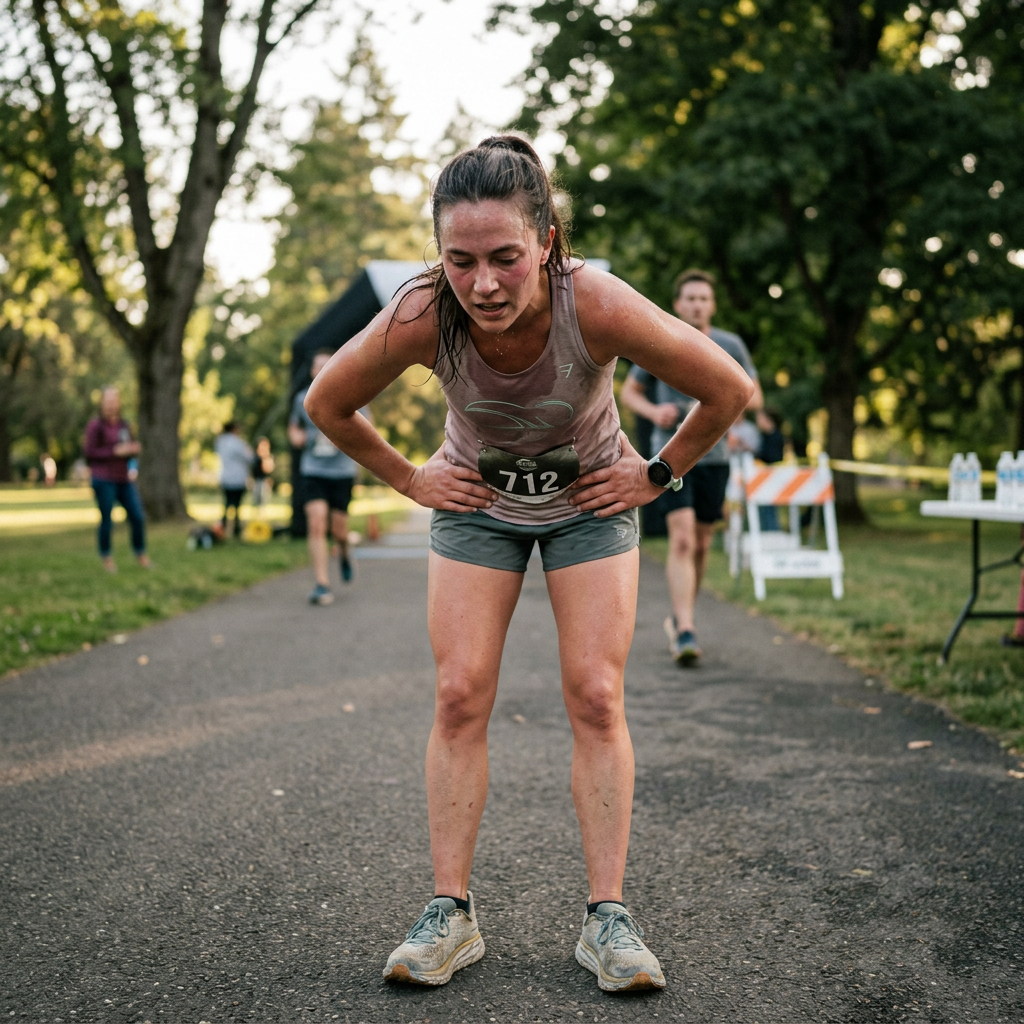
 You started training harder. The early gains were addictive strength up, weight down, mood high. Then, somewhere around week eight or ten, the wheels came off. Your sleep got lighter. Your resting heart rate climbed. Lifts that felt easy a month ago suddenly felt impossible. That nagging shoulder won’t quit. You feel tired, but bored too. Welcome to the murky terrain of overtraining where the very behavior that built your fitness starts to dismantle it.
Overtraining syndrome (OTS) isn’t a “tough week.” It’s a state of accumulated stress where your nervous system, hormones, and tissues stop adapting to training and start regressing from it. A 2026 narrative review in Sensors confirms that prolonged dips in heart rate variability (HRV) are one of the earliest physiological flags that an athlete is sliding from healthy overreaching into non-functional overreaching and, eventually, full-blown OTS. The good news? With the right monitoring, recovery tools, and discipline, you can stop it before it wrecks your progress.
🚀 Quick Picks: 5 Tools to Help You Avoid Overtraining
- Best HRV Tracker (Wrist): Garmin vívosmart 5
- Most Accurate HRV Monitor: Polar H10 Chest Strap
- Best Active Recovery Tool: TriggerPoint GRID Foam Roller
- Best Massage Gun for Recovery: Bob and Brad C2
- Best Sleep Recovery Tool: YnM Weighted Blanket
What Is Overtraining Syndrome?
Training is stress. Recovery is when adaptation actually happens. Push hard, recover harder, and your fitness compounds. Push hard and skip recovery, and you accumulate what sports scientists call “allostatic load” physiological wear that exceeds what your body can repair. Mild allostatic load is healthy overreaching. Persistent overload becomes non-functional overreaching. Left unchecked for weeks, it tips into overtraining syndrome a state that can sideline elite athletes for months, according to the American College of Sports Medicine.
The body’s autonomic nervous system shifts. Sympathetic (“fight-or-flight”) tone dominates, parasympathetic (“rest-and-digest”) tone collapses, and HRV the millisecond-level variation between heartbeats drops. TrainingPeaks notes that “when variability is diminished for a period of time, it is a good sign that you may be on the verge of overtraining, getting sick, or at the very least, tired enough that your ability to respond to training is compromised.” That’s why HRV is the cornerstone of every modern overtraining-prevention protocol.
7 Warning Signs You’re Overtraining
Overtraining doesn’t announce itself with a single red flag it whispers from several directions at once. If three or more of these are true for you right now, dial things back this week:
- Resting heart rate is elevated 5+ bpm for several mornings in a row.
- HRV trending down for a week or more (not just a one-day dip).
- Sleep is shallow or fragmented despite hitting 7–9 hours in bed.
- Workouts feel disproportionately hard — even easy zones feel like threshold.
- Persistent muscle soreness (DOMS) that doesn’t clear in 72 hours.
- Mood disturbance: irritability, low motivation, blunted emotional response.
- Recurring minor illnesses — sniffles, sore throats, mouth ulcers.
The fix isn’t always more rest days; sometimes it’s smarter recovery. The five tools below combined with sleep, food, and a deload week when your data demands it give you the feedback loop and the recovery firepower to stay on the right side of the line.
1. Garmin vívosmart 5 Fitness Tracker
~$130–$150 · Check on Amazon →

The Garmin vívosmart 5 is the most approachable HRV-and-recovery tracker on the market no subscription, no monthly fee, just a slim wrist band that quietly records the metrics that matter while you sleep. Garmin’s HRV Status feature establishes a personal three-week baseline, then flags when your overnight numbers drift below it. Pair that with Body Battery (a 0–100 daily energy score that drains with stress and refills with rest) and you have a real-time dashboard for whether to push or pull back.
Compared to a watch, the vívosmart 5 disappears on the wrist, which matters if you’re tracking for recovery and not for show. Battery life stretches to about 7 days per charge. It also handles wrist-based heart rate during workouts, sleep staging, stress score, and Pulse Ox at night a stack that, taken together, paints a fuller picture of allostatic load than any single metric.
👍 Pros
- HRV Status with personal baseline
- No monthly subscription fee
- Body Battery is uniquely intuitive
- Excellent sleep stage tracking
- Slim, comfortable for sleep wear
👎 Cons
- Small display can feel cramped
- No built-in GPS
- Wrist HRV less accurate than chest strap
2. Polar H10 Heart Rate Monitor Chest Strap
~$80–$100 · Check on Amazon →
 If you’re serious about HRV-guided training the kind of precision sports labs and elite endurance coaches rely on wrist optical sensors aren’t enough. The Polar H10 is widely accepted as the gold standard for consumer HRV measurement, with electrocardiogram-grade accuracy that mirrors clinical equipment. Independent validation studies consistently rank chest straps above wrist devices for both heart rate and HRV (RMSSD) precision.
What makes it ideal for overtraining prevention is the orthostatic test workflow. Pair the strap with the free Polar Beat or HRV4Training apps, lie down for 2 minutes, then stand for 2 minutes. The app calculates your morning HRV and flags days where your nervous system is asking for a deload. The strap also broadcasts on both Bluetooth and ANT+, so it works with Garmin watches, Peloton, Zwift, and basically every fitness platform.
👍 Pros
- Lab-grade HRV accuracy
- Works with any fitness app
- Replaceable battery (no charging)
- Internal memory for strap workouts
- Comfortable Pro strap design
👎 Cons
- Less convenient than wrist
- No display
- Needs occasional dampening
3. TriggerPoint GRID Foam Roller
~$36–$45 · Check on Amazon →

Active recovery is one of the most under-utilized tools for staying out of OTS — light blood-flow work between hard sessions accelerates clearance of metabolic byproducts and reduces residual muscle tension. The TriggerPoint GRID is the original 13-inch hollow-core multi-density foam roller, and almost two decades after its release it’s still the one physical therapists hand to athletes when soft-tissue self-care is the prescription.
The patented GRID surface mimics a therapist’s hands flat planes for broad muscle bellies, narrow channels for tubular pressure, and small nodes for targeted trigger points. The hollow EVA core supports up to 500 pounds without deforming. Peer-reviewed research has linked regular foam rolling to reduced delayed-onset muscle soreness and improved range of motion both of which protect you from the chronic stiffness that compounds into overuse injury during heavy training blocks.
👍 Pros
- Patented multi-zone surface
- Holds shape under heavy use
- Compact 13-inch travel size
- Free instructional video library
- Trusted by physical therapists
👎 Cons
- Firm — beginners may want softer
- Pricier than basic rollers
- Not long enough for full back
4. Bob and Brad C2 Massage Gun
~$80–$120 · Check on Amazon →

Designed by physical therapists Bob Schrupp and Brad Heineck (yes, the YouTube duo with the famous 5+ million subscriber channel), the C2 is the rare massage gun that punches well above its price tag. At 1.5 lb, it’s FSA/HSA-eligible and operates as quietly as 40 dB on its lowest setting — quiet enough to use during a Zoom call or a movie. Five speeds ramp from 2,000 to 3,200 RPM with up to 45 lbs of stall force.
For overtraining prevention, percussive therapy serves a specific role: it accelerates parasympathetic recovery between sessions when used at low intensity for 1–2 minutes per muscle group. A 2020 study in the Journal of Sports Science and Medicine found percussive therapy comparable to traditional massage for short-term flexibility and pain reduction. The C2’s auto-shutoff at 10 minutes also prevents the over-use that turns recovery tools into more stress on already taxed tissue.
👍 Pros
- FSA/HSA-eligible
- Whisper-quiet 40 dB low-end
- Lightweight at just 1.5 lbs
- 10-min auto-shutoff prevents overuse
- Designed by licensed PTs
👎 Cons
- Stall force lower than premium guns
- Battery not user-replaceable
- No heat/cold version at this price
5. YnM Weighted Blanket
~$50–$80 · Check on Amazon →
 If you only fix one thing in your routine to dodge OTS, fix sleep. The National Sleep Foundation repeatedly highlights deep sleep as the primary window during which growth hormone is released, muscle is repaired, and the central nervous system “discharges” sympathetic load. A weighted blanket isn’t a gimmick research from a 2020 study in the Journal of Clinical Sleep Medicine shows weighted blankets significantly reduce insomnia severity through deep pressure stimulation, which boosts parasympathetic tone exactly the system overtrained athletes need to feed.The YnM 15-lb blanket (rated for adults 90–140 lb) uses 7-layer cotton-and-glass-bead construction with a precise 5-inch quilted grid, so the beads stay distributed instead of bunching to your feet. The cooling glass beads breathe well year-round, which matters because the worst sleep many athletes get is the night after a hard session, when core temp runs high.
👍 Pros
- Most reviewed weighted blanket on Amazon
- Cooling glass beads — sleeps neutral
- Tight 5-inch baffles keep beads in place
- Multiple sizes/weights for any user
- Backed by sleep-quality research
👎 Cons
- Cotton cover absorbs heat in summer
- Heavy to wash
- Takes 1–2 weeks to fully adjust
Side-by-Side Comparison
| Product | Price | Primary Role | Best For | Rating |
|---|---|---|---|---|
| Garmin vívosmart 5 | $130–$150 | HRV + sleep tracking | Daily monitoring | ★★★★★ |
| Polar H10 | $80–$100 | Lab-grade HRV | Serious athletes | ★★★★★ |
| TriggerPoint GRID | $36–$45 | Self-myofascial release | Active recovery | ★★★★★ |
| Bob and Brad C2 | $80–$120 | Percussive therapy | Targeted recovery | ★★★★½ |
| YnM Weighted Blanket | $50–$80 | Sleep & nervous-system reset | Deep recovery | ★★★★½ |
How to Pick the Right Recovery Stack
Start With Data, Not Gear
Buying recovery tools without measuring recovery is like fixing a leak without finding the source. Before you stockpile foam rollers and sleep aids, lock down a way to track HRV and resting heart rate daily. The vívosmart 5 is the easiest entry point strap it on, sleep in it for two weeks, and let HRV Status build a baseline. From there, every other recovery decision becomes data-driven instead of guesswork.
Match Tools to Recovery Phase
Not all recovery is the same. Acute recovery (the 0–24 hours after a session) responds best to active modalities foam rolling, walking, and short percussive sessions. Chronic recovery (days 2–7 of a heavy block, or whenever HRV trends down) demands deeper intervention: better sleep architecture, more parasympathetic input, and lower training stress.
Layer Behavior Over Equipment
The five products above are powerful, but only if they’re stacked on top of fundamentals: 7–9 hours of sleep, protein at every meal, daily steps, hydration, and at least one full rest day per week. ACSM consistently emphasizes that no piece of recovery technology can substitute for sleep deprivation or chronic caloric deficit.
Frequently Asked Questions
How long does it take to recover from overtraining syndrome?
Mild non-functional overreaching typically resolves in 2–4 weeks of reduced training. True overtraining syndrome where mood, hormones, and HRV stay suppressed for months can take 6 months to over a year of carefully managed return-to-training. Catching it early is everything.
Is HRV the only metric I should monitor?
HRV is the most sensitive single signal, but the most reliable approach combines it with resting heart rate, sleep quality, training load, and subjective wellness scores. Look for trends, not single days. A 7–10 day downward trend is your nervous system asking for relief.
Can foam rolling and massage guns prevent overtraining?
By themselves, no but they reduce the residual mechanical and neural tension that builds during heavy blocks, which lowers your overall stress load and lets you handle more training before tipping into OTS. Pair them with sleep and HRV monitoring for compounding benefits.
What’s the difference between overreaching and overtraining?
Functional overreaching is short-term, planned, and resolves with 1–2 weeks of recovery. Non-functional overreaching is unplanned and takes weeks to months to clear. Overtraining syndrome is a chronic state requiring extended professional management. The line is mostly about duration and response to recovery.
How heavy should my weighted blanket be?
Roughly 10% of your body weight, give or take 1–2 lbs. A 150-lb adult will land comfortably on a 15-lb blanket. Too light and you miss the deep pressure stimulation effect. Too heavy and you fragment sleep — the opposite of what you want when fighting OTS.
🏆 Final Verdict
If you’re going to buy one tool to start preventing overtraining today, it’s the Garmin vívosmart 5. The HRV Status + Body Battery combo turns invisible nervous-system fatigue into a number you can act on, with no monthly fee.
If you’re a competitive athlete chasing precision, add the Polar H10 for ECG-grade morning HRV. For active recovery on a budget, the TriggerPoint GRID is non-negotiable. The YnM Weighted Blanket is the cheapest sleep hack in this guide. And the Bob and Brad C2 is the percussive workhorse that ties everything together.
Final Thoughts
Overtraining syndrome is the silent thief of athletic progress. It doesn’t take you out with a torn hamstring or a blown disc it just slowly turns hard work into diminishing returns until you’re spending more time tired than fit. The cure is preventive, not reactive. Track the right metrics, stack a sensible recovery toolkit, sleep like it’s your job, and respect the days your data tells you to back off. Done correctly, the line between overreaching and overtraining becomes a wall you’ll never run into again.
Quick links to all five recovery tools featured above:
- Garmin vívosmart 5 Fitness Tracker
- Polar H10 Heart Rate Monitor Chest Strap
- TriggerPoint GRID Foam Roller
- Bob and Brad C2 Massage Gun
- YnM Weighted Blanket
Train hard. Recover harder. The best gains belong to athletes who never let the needle swing too far past where their body can adapt.
Leave a Reply