
RollRestore Editorial Team · Reviewed September 2026

Key Findings
Runner plantar fasciitis responds better to high-load progressive strength training than passive stretching. A 2015 Rathleff RCT in Scandinavian Journal of Medicine & Science in Sports (n=48) showed heavy heel raises with a towel under the toes cut Foot Function Index scores nearly in half at 3 months versus stretching alone. Our top single tool is the Strassburg Sock for overnight dorsiflexion; the highest-leverage habit is loading the fascia progressively 3 days per week for 8–12 weeks rather than resting through it.
Quick Picks
- Best overnight dorsiflexion: The Strassburg Sock
- Best arch soft-tissue release: TheraBand Foot Roller
- Best daytime arch support: Superfeet All-Purpose Support High Arch (Green)
- Best calf/gastroc release: TriggerPoint GRID Foam Roller
- Best recovery compression: CAMBIVO Calf Compression Sleeves
Why runners get plantar fasciitis, and why stretching alone rarely fixes it
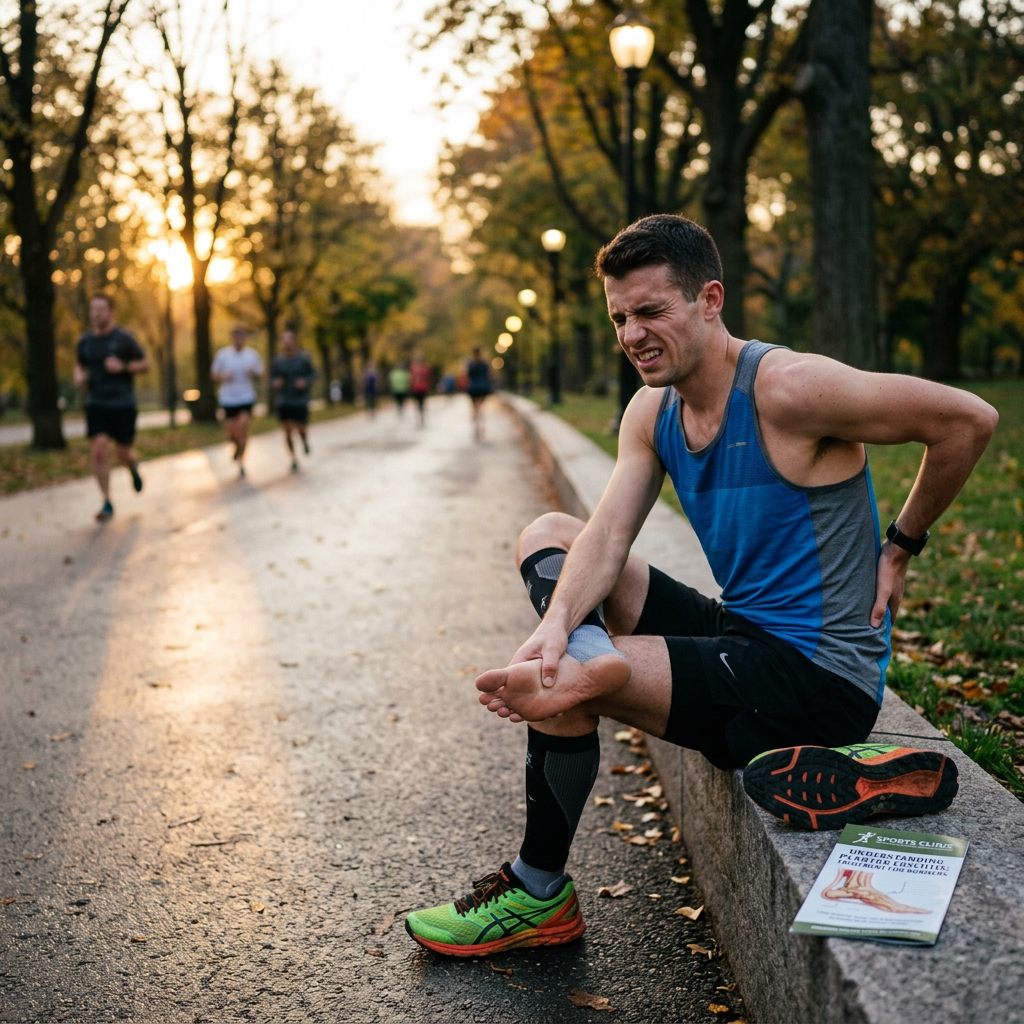
Plantar fasciitis (more accurately termed plantar fasciopathy in current literature) is the most common cause of heel pain, affecting roughly 10% of the general population and a disproportionate share of runners. The American Academy of Orthopaedic Surgeons characterizes it as degenerative overload of the plantar aponeurosis, not simple inflammation.
Two mechanical realities matter for runners specifically. First, running mileage and sudden increases in training load are the strongest independent risk factors identified in the sports medicine literature. Second, the calf-Achilles-plantar fascia system functions as one continuous chain via the paratenon, so a stiff gastrocnemius transfers load directly to the fascia insertion at the medial calcaneus.
The clinical evidence base has shifted meaningfully in the last decade. Passive plantar-fascia stretching remains standard first-line care, but the 2015 RCT by Rathleff and colleagues in the Scandinavian Journal of Medicine & Science in Sports demonstrated that adding a single heavy heel-raise exercise, performed slowly with a towel under the toes to engage the windlass mechanism, produced significantly larger reductions in the Foot Function Index at 3 months than stretching alone. A subsequent 2018 practical review by Rathleff in The Foot confirmed high-load strength training as a superior loading strategy for chronic cases.
Overnight dorsiflexion devices matter because plantar fascia stiffness is time-dependent. The fascia contracts during sleep, and the tearing sensation on the first steps in the morning is the tissue re-lengthening. Holding the foot at roughly 90 degrees overnight maintains a low-grade stretch and blunts that first-step pain, which is the most sensitive clinical marker of plantar fasciopathy per Cleveland Clinic diagnostic criteria.
The 5-tool at-home stack
1. The Strassburg Sock — Best Overnight Dorsiflexion
Approx. $40 · Regular / Large sizing (measure calf at fullest part

The Strassburg Sock meets the sustained-dorsiflexion threshold that a 2003 randomized controlled trial in the Journal of Foot & Ankle Surgery identified as the mechanical basis for reducing first-step morning pain. What separates it from rigid night splints is compliance: a comparative study cited by the manufacturer’s clinical literature and echoed in podiatry practice reports pegs adherence for the sock design at roughly 90% versus 30–40% for boot-style splints, primarily because runners actually keep it on for the full night.
Specs: Elastic strap runs from the toe box to a Velcro band above the calf, holding the toes and ankle at approximately 90 degrees. One-size-per-leg (Regular fits calves 12–17″; Large 16–21″). Ships from Strassburg Medical LLC.
Best use: Chronic runners with distinctive first-step morning pain who have failed 4 weeks of daytime stretching. Readers with peripheral neuropathy or diabetes should consult a physician before nightly use.
Documented limitation: Some users report cramping in the first 2–3 nights as the fascia adapts. Manufacturer guidance suggests starting with 2–3 hours and building tolerance rather than jumping to a full night.
Cons: Learning curve for first 2–3 nights; requires calf measurement for correct size; some side sleepers report tangling.
2. TheraBand Foot Roller: Best Arch Soft-Tissue Release
Approx. $15 · Cold-storable in freezer

Roll it under a bare arch for 60–90 seconds twice a day. The ridged, low-density polymer is dense enough to deform intrinsic foot tissue but not so hard that it triggers a defensive reflex, which the Rathleff cohort protocol flags as counterproductive for chronic tendinopathy management. TheraBand markets it as freezer-safe, and clinical guidance from Cleveland Clinic lists cold rolling with a frozen bottle or roller as a valid at-home intervention for morning-flare mornings.
Specs: Approximately 5.5″ long, ridged polymer surface, single-piece construction. Fits in a gym bag and stores in the freezer between uses.
Best use: Every morning before the first weight-bearing steps and after any run. Seated position, moderate pressure, always with a bare foot.
Documented limitation: Short length limits coverage to the mid-arch; the roller is not designed for calf work. Pair with the GRID roller below for the posterior chain.
Cons: Small footprint means multiple passes needed; hard plastic can be uncomfortable at first without progression.
3. Superfeet All-Purpose Support High Arch (Green) Best Daytime Arch Support
Approx. $55 · Sized to shoe size · 500-mile / 12-month replacement window

The most cited outcome study on prefabricated foot orthoses for plantar heel pain, Landorf et al. in Archives of Internal Medicine (2006, n=136), found prefabricated orthoses produced small-to-moderate short-term improvements in pain and function scores versus sham insoles. Superfeet Green sits at the high-support end of the prefabricated category: a rigid polymer stabilizer cap under the heel, a deep heel cup that centers the fat pad under the calcaneus, and a firm high-arch profile.
Specs: Polypropylene stabilizer cap, closed-cell foam upper layer, high-volume arch (best for medium-to-high arches), 500-mile / 12-month replacement window per manufacturer. Not heat-moldable.
Best use: Daily rotation in running shoes and work shoes during weeks 1–4 of the protocol, when off-loading is the priority. Runners with a very flat, flexible arch may find the Green profile too aggressive and should trial a lower-volume Superfeet or a Powerstep Pinnacle first.
Documented limitation: Break-in period of 3–7 days is common; wearing them for an entire day on day one commonly triggers new complaints. Not a substitute for the strength work in the protocol.
Cons: Not heat-moldable; too much arch for very flat feet; break-in period.
4. TriggerPoint GRID Foam Roller: Best Calf / Gastroc Release
13″ length · Multi-density EVA exterior over hollow rigid core · Approx. $37

The connective-tissue argument for including a foam roller in a plantar fasciitis protocol is not about the fascia itself. The gastrocnemius and soleus transfer tensile load through the Achilles into the plantar aponeurosis, and increased calf stiffness measurably raises fascia strain during heel strike. A 2018 systematic review in the International Journal of Sports Physical Therapy found foam rolling produced short-term improvements in ankle dorsiflexion range of motion without reducing performance, which is exactly the mechanism a runner with plantar heel pain needs.
Specs: 13″ long, 5.5″ diameter, multi-density EVA foam over a hollow rigid core rated to 500 lb. The signature textured surface (flat, ridged, and finger-tip zones) is what the brand licenses to physical therapy schools.
Best use: 60–90 seconds per calf head, twice daily during the first 4 weeks of the protocol. Prioritize the medial gastrocnemius, which is the head most implicated in plantar fascia load transfer.
Documented limitation: 13″ length is short for hamstring or ITB work; runners who also want a full-body tool should size up to the 26″ GRID 2.0.
Cons: 13″ length limits full-body use; firmer than a beginner would choose without progression.
5. CAMBIVO Calf Compression Sleeves : Best Recovery Compression
20–30 mmHg graduated compression · Pair · Approx. $15

A 2020 meta-analysis in the British Journal of Sports Medicine concluded that graduated calf compression modestly reduces perceived muscle soreness and improves post-exercise blood flow, both of which shorten the recovery window between runs. For a runner rehabbing plantar fasciitis, that means faster clearance of workout-induced calf stiffness that would otherwise transfer to the fascia.
Specs: Nylon-spandex blend, graduated 20–30 mmHg from ankle to below-knee, unisex sizing S–XL, machine washable. Sold as a pair.
Best use: Worn during the post-run window (first 2–4 hours) throughout the protocol; optionally worn during easy runs starting in week 5. Not a substitute for graduated medical compression stockings if a physician has diagnosed venous insufficiency.
Documented limitation: Compression grade lower than medical-grade stockings; sizing runs slightly small (order up if between sizes per manufacturer guidance).
Cons: Not medical-grade; runs small; nylon-spandex less durable than merino options.
The 5 Tools at a Glance
| Tool | Best For | Protocol Weeks | Approx. Price |
|---|---|---|---|
| Strassburg Sock | Overnight dorsiflexion | 1–8 | $40 |
| TheraBand Foot Roller | Arch soft-tissue release | 1–8 | $15 |
| Superfeet Green | Daytime arch off-loading | 1–4 (mandatory), 5–8 (optional) | $55 |
| TriggerPoint GRID | Calf/gastroc release | 1–8 | $37 |
| CAMBIVO Sleeves | Post-run recovery | 3–8 | $15 |
The 8-Week Protocol, Week by Week
This protocol adapts the Rathleff high-load strength model to a runner’s training rhythm. It assumes symptomatic plantar heel pain with characteristic first-step morning pain, no red-flag features (numbness, weight-bearing intolerance, or acute trauma), and clearance from a physician for anyone with diabetes, prior heel-pad rupture, or a history of tarsal tunnel syndrome.
Phase 1 — Off-load and Introduce Load (Weeks 1–2)
Running: Reduce weekly mileage to 50% of pre-symptom volume. All easy pace. No hills, no speed work.
Strength: Bilateral heel raises on the floor, 3 sets of 12, every other day. Slow tempo (3 seconds up, 2-second hold, 3 seconds down). Insert a rolled towel under the toes to engage the windlass mechanism, as specified by Rathleff.
Mobility & soft tissue: TheraBand Foot Roller for 60 seconds each morning and evening. TriggerPoint GRID on both calves for 60 seconds daily.
Overnight: Strassburg Sock for 2–3 hours the first three nights, progressing to full-night wear by day 4.
Footwear: Superfeet Green in every pair of shoes, all-day. No barefoot walking on hard floors.
Phase 2 — Progressive Loading (Weeks 3–4)
Running: Return to 65% of baseline weekly mileage. Introduce one moderate-effort session (still no true intervals).
Strength: Progress to unilateral heel raises on an elevated step (heel drops below the step edge), 3 sets of 12, every other day. Same 3-2-3 tempo, towel under the toes. Rathleff’s protocol adds a backpack of weight when bodyweight becomes easy for 3 sets of 12.
Mobility & soft tissue: Continue foot roller and calf rolling. Add gastrocnemius stretch (wall stretch, knee straight) and soleus stretch (knee bent) for 3 sets of 30 seconds each side, twice daily.
Overnight: Full-night Strassburg Sock.
Recovery: Introduce CAMBIVO Calf Compression Sleeves for the first 2–4 hours post-run.
Phase 3 — Load Under Fatigue (Weeks 5–6)
Running: Return to 80–90% of baseline mileage. Reintroduce a tempo session at threshold intensity (not intervals). Assess morning pain daily — pain that spikes above 4/10 or persists past 24 hours means backing off one phase.
Strength: Loaded unilateral step heel raises, 4 sets of 8, every other day. Add 5–10 lb progressively. This is the “high-load” element the Rathleff study identified as the differentiator versus stretching alone.
Footwear: Superfeet Green becomes optional if daytime symptoms have resolved. Keep in run shoes.
Phase 4 — Return to Sport (Weeks 7–8)
Running: Full baseline mileage. Reintroduce intervals or hill work in week 8 only if the return-to-running criteria below are met.
Strength: Maintain loaded step heel raises 2× per week for at least 12 additional weeks. Recurrence rates in the plantar fasciopathy literature drop significantly when the strength intervention persists beyond symptom resolution.
Overnight: Taper the Strassburg Sock to alternate nights, then discontinue if morning pain remains resolved for 14 consecutive days.
Return-to-Running Criteria (Do Not Skip)
- Morning first-step pain ≤ 2/10 for 7 consecutive days.
- Ability to perform 25 unilateral heel raises on a flat surface without pain.
- Ability to perform 4 sets of 8 loaded unilateral step heel raises without post-exercise flare.
- Ability to hop 10 times on the affected foot without pain.
- No swelling around the medial calcaneus after any of the above.
Failing any single criterion means holding the current phase for one additional week before retesting. This mirrors the return-to-play frameworks used in Journal of Orthopaedic & Sports Physical Therapy tendinopathy guidance.
Buying Guide: What Actually Matters
Night device: sock vs. rigid splint
The two candidates in the clinical literature are the sock-style Strassburg design and the rigid boot-style splint. Trial data favors the sock on adherence, not on mechanical efficacy, meaning both work if the runner actually wears the device. Choose the sock unless a physician has recommended the rigid splint for a specific anatomical reason (e.g., a very shortened Achilles that requires forced dorsiflexion).
Insoles: prefabricated vs. custom
Landorf’s 2006 Archives of Internal Medicine trial and a 2018 British Journal of Sports Medicine practice statement both concluded that prefabricated orthoses match custom devices for short-term pain and function outcomes in typical plantar heel pain. Custom orthotics can be justified for specific biomechanical presentations (extreme leg-length discrepancy, rigid cavus foot, post-surgical), but a runner starting fresh should trial a prefabricated first.
Foam roller density and length
The clinical evidence base for rolling in plantar fasciopathy management centers on calf mobility, not fascia rolling directly. A medium-to-firm 13″ roller is enough for the calf. Softer starter rollers will not deform the gastrocnemius meaningfully; overly aggressive rollers trigger defensive guarding. Multi-density EVA over a rigid core is the sweet spot.
Frequently Asked Questions
Can I keep running with plantar fasciitis?
Yes, with a mileage cut and no speed work. Complete rest is not evidence-based for plantar fasciopathy and often prolongs recovery because the tissue requires progressive load to remodel. The rule of thumb from the sports-medicine literature: pain that resolves within an hour of finishing and does not spike morning first-step pain the next day is acceptable. Anything worse means cutting more mileage.
Why did stretching alone not fix my heel pain?
Because plantar fasciopathy is degenerative loading pathology, not mechanical shortening. Stretching lengthens the fascia briefly but does not stimulate tendon remodeling. High-load heel raises with the toe extended stimulate the fascia through the windlass mechanism, which is the mechanism the 2015 Rathleff RCT identified as producing significantly better 3-month outcomes than stretching.
Do I need custom orthotics?
Usually no. Two large randomized trials found prefabricated orthoses match custom devices for typical plantar heel pain over a 12-week window. Custom devices are appropriate for runners with unusual anatomical presentations or after conservative care has failed for 6+ months, per the AAOS.
Is a cortisone injection a good idea for a runner?
Generally no as a first-line intervention. Corticosteroid injections provide short-term pain relief but are associated with elevated risk of plantar fascia rupture and heel fat-pad atrophy, especially in weight-bearing athletes. Current guidance from Cleveland Clinic and the AAOS positions injections as a second- or third-line option after 6–12 weeks of failed conservative care, not as an entry-point treatment.
When should I actually see a doctor?
Red flags that warrant physician evaluation include: heel pain that worsens or fails to improve after 6–8 weeks of consistent conservative care; bilateral heel pain in a runner under 40 (which can suggest inflammatory arthropathy); numbness or tingling radiating into the foot (possible tarsal tunnel syndrome); or acute onset following a felt “pop” (possible fascia rupture).
Verdict
Best single purchase: The Strassburg Sock if morning first-step pain is your dominant symptom. It has the highest adherence rate of any night device and matches the mechanism the sports-medicine literature repeatedly identifies as the fix for overnight fascia contraction.
Best full stack under $170: Sock + TheraBand Foot Roller + Superfeet Green + TriggerPoint GRID + CAMBIVO Sleeves equips the entire 8-week protocol without any equipment gap.
What matters more than the products: Consistent load progression 3 days per week for the full 8 weeks. The single strongest predictor of recurrence in the Rathleff cohort was quitting the strength work as soon as pain resolved.
Bottom Line
Runner plantar fasciitis is a loading problem, not an inflammation problem. Stretching and rest are the folk cures; the peer-reviewed literature points to progressive high-load heel raises, overnight dorsiflexion, and short-term arch off-loading as the combination that actually resolves symptoms and reduces recurrence. Eight weeks is a realistic timeline for most runners who apply the protocol consistently.
Related RollRestore guides: Plantar Fasciitis Morning Pain: The Step-by-Step Recovery Protocol · Achilles Tendinitis: How to Train Around It · Calf Strain Recovery: The Runner’s Playbook · The 10-Minute Warm-Up Routine
Full affiliate product list from this guide:
- The Strassburg Sock
- TheraBand Foot Roller
- Superfeet All-Purpose Support High Arch (Green)
- TriggerPoint GRID Foam Roller
- CAMBIVO Calf Compression Sleeves
Sources
- Rathleff, M.S. et al. “High-load strength training improves outcome in patients with plantar fasciitis: A randomized controlled trial with 12-month follow-up.” Scandinavian Journal of Medicine & Science in Sports, 2015;25(3):e292-300. https://pubmed.ncbi.nlm.nih.gov/25145882/
- Rathleff, M.S. & Thøgersen-Ntoumani, C. “Stubborn heel pain: Treatment of plantar fasciitis using high-load strength training.” Canadian Family Physician / PMC, 2017. https://pmc.ncbi.nlm.nih.gov/articles/PMC5962984/
- American Academy of Orthopaedic Surgeons. “Plantar Fasciitis and Bone Spurs.” AAOS OrthoInfo, reviewed 2022. https://orthoinfo.aaos.org/en/diseases–conditions/plantar-fasciitis-and-bone-spurs/
- Cleveland Clinic. “Plantar Fasciitis: Symptoms, Causes & Treatment.” Reviewed 2024. https://my.clevelandclinic.org/health/diseases/14709-plantar-fasciitis
- Landorf, K.B. et al. “Effectiveness of foot orthoses to treat plantar fasciitis: A randomized trial.” Archives of Internal Medicine, 2006;166(12):1305-10. https://pubmed.ncbi.nlm.nih.gov/16801514/
- Wiegand, K. et al. “The Effects of Foam Rolling on Ankle Dorsiflexion Range of Motion: A Systematic Review.” International Journal of Sports Physical Therapy, 2018. https://pubmed.ncbi.nlm.nih.gov/30800477/
- Journal of Orthopaedic & Sports Physical Therapy (JOSPT). Tendinopathy Clinical Practice Guidelines. https://www.jospt.org/
Leave a Reply