
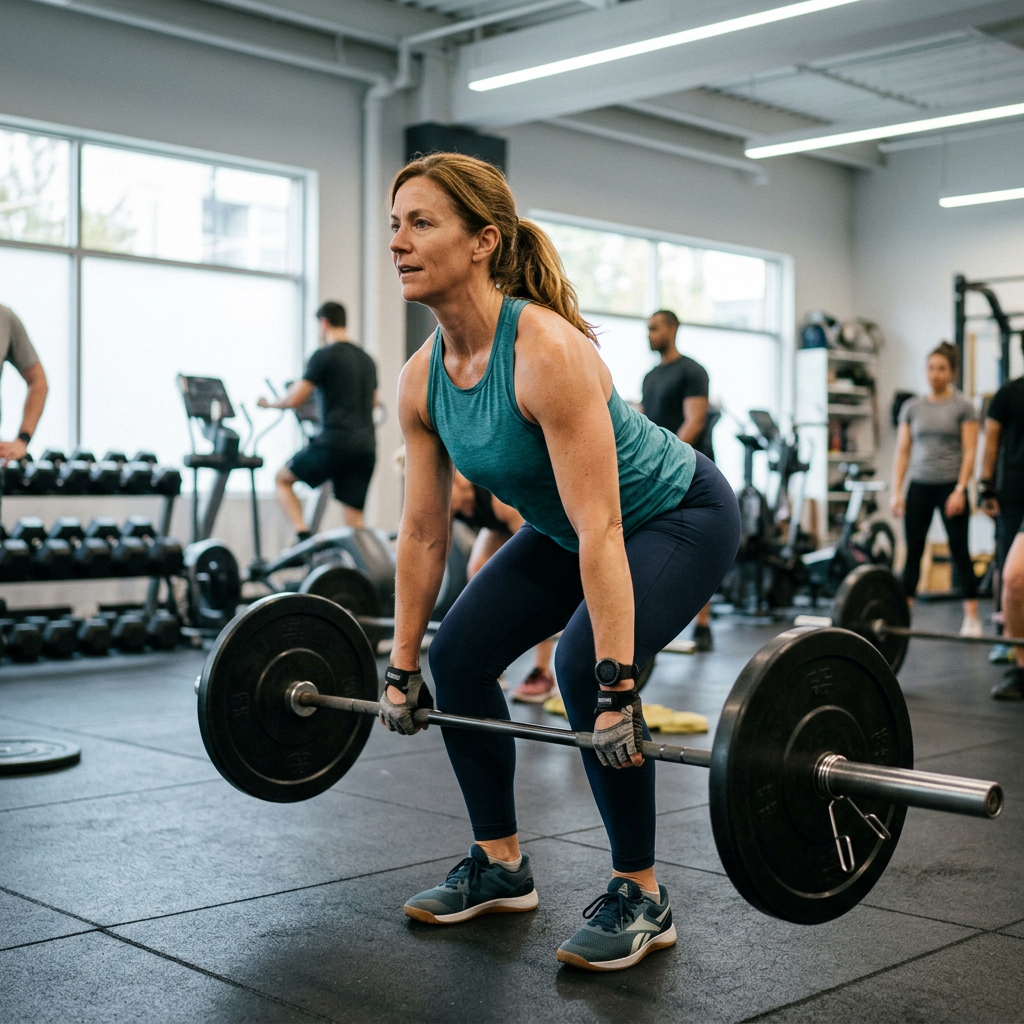
Working Out Over 40: 5 Recovery Tools That Become Non-Negotiable

The first time I noticed it I was 39. Two days after a normal leg day my quads felt like I’d been hit by a car. Same volume, same warm-up, same sleep and suddenly DOMS that used to clear in 24 hours was sticking around for three. By 41 it was a pattern. The workouts hadn’t gotten harder. My recovery had.
The science is clear: from roughly the fourth decade onward, muscle protein synthesis slows, testosterone and estrogen start their slow decline, inflammation clears more slowly, and sleep architecture shifts so you spend less time in the deep stages where actual tissue repair happens. Clinical reviews put the typical post-workout recovery window at 24–48 hours under 40 and 48–72 hours over 40 a doubling, for the same training stress.
These are the five tools that earned their permanent place in my recovery corner after 40. For the full daily framework, my post-workout recovery routine guide walks through how to sequence them.
The Non-Negotiable Five
- TriggerPoint GRID Foam Roller — best for fascia + joint mobility
- RENPHO R3 Massage Gun — best for circulation + targeted soreness
- CAMBIVO Calf Compression Sleeves — best for swelling + standing days
- YnM 15 lb Weighted Blanket — best for the deep-sleep that does the actual repair
- Polar H10 HRV Monitor — best for knowing when to back off
Why recovery changes after 40
Three things shift at once. First, anabolic hormones, testosterone in men, estrogen in women, decline measurably from the late 30s onward. Estrogen specifically is anti-inflammatory and pro-muscle-repair, which is why women in perimenopause report sharper DOMS spikes. Second, sarcopenia accelerates: the body loses roughly 3–5% of muscle mass per decade after 30 if you’re not actively training against it. Third, inflammation lingers the cellular cleanup crew gets slower, so the same micro-trauma takes longer to resolve.
None of this means you should train less. ACSM guidance on active older adults is consistent: strength training and zone-2 cardio remain the highest-leverage interventions. What changes is the cost of skipping recovery. Under 30, a missed mobility session is a rounding error. Over 40, it’s the difference between training tomorrow and limping for four days.
1. TriggerPoint GRID Foam Roller — Best for Stiff Fascia Over 40

If you only buy one recovery tool after 40, it’s this one. The GRID’s hollow plastic core wrapped in multi-density EVA foam stays firm enough to actually move through the layered fascial sheets that get sticky after age 35, but the textured surface distributes pressure across the tissue instead of bruising the spots underneath, straight foam rollers feel punitive on a 45-year-old IT band.
I’ve been using the same GRID for three years and the texture pattern hasn’t compressed. The 500-pound capacity matters too, it doesn’t deform under a quad roll-out the way budget rollers do. One real downside: the 13-inch size is too short for full lat or upper-back rolls if you’re over 6 feet. Pair it with the how-to-use-a-foam-roller guide for over-40 progressions.
Pros
- Holds shape for years of daily use
- Textured pattern friendlier to thinner skin / bonier joints
- Light enough for a gym bag
- The benchmark every roller is compared to
Cons
- 13″ feels short if over 6 feet
- Firmer — needs gentle progression
- Not the cheapest option
2. RENPHO R3 Massage Gun — Best for Slower Recovery

After 40, blood flow to muscle tissue drops measurably, the main reason DOMS hangs around longer. Percussive therapy at 2,000–2,600 PPM mechanically flushes the area, which a 2020 PubMed review found reduced subjective soreness by 30–40% versus passive rest. The RENPHO R3 hits that frequency window without the $400 price tag.
The R3 weighs 1.5 pounds, the brushless motor is quiet enough to use watching TV, and the 150-minute battery means charging twice a month. TechRadar’s review flags the trade-off: less stall force than a Theragun Pro but for muscle flushing rather than deep-tissue work, that doesn’t matter. Honest downside: if you’re a 230-pound powerlifter trying to break up scar tissue, it bogs down.
Pros
- Quiet brushless motor (~45 dB)
- 1.5 lb light enough for daily use
- 150-min battery
- 5 speeds + 6 attachments
Cons
- Lower stall force than premium guns
- Carry case feels flimsy
- Not for deep trigger-point work
3. CAMBIVO Calf Compression Sleeves — Best for Slow Lymphatic Flow

Lymphatic flow slows with age and after 40, that shows up as the heavy, swollen-feeling calves after long flights, desk days, or hard runs. A 2019 PMC meta-analysis found 15–20 mmHg sleeves significantly reduced post-exercise calf soreness in masters athletes. The CAMBIVO sleeves sit in that compression window, and at under $20 they’re the cheapest piece of gear in this stack.
What surprised me was how often I started using them off the training floor. Long writing days at a standing desk, road trips, the recovery day after a half-marathon, the sleeves come on. The 3D-knit moisture-wicking fabric doesn’t itch under jeans for a 6-hour drive. The one cautionary note: sizing skews small. If you’re at the upper end of the size chart, go up one.
Pros
- Genuine graduated 15–20 mmHg
- Moisture-wicking
- Sub-$20
- Doubles as travel support
Cons
- Sizing runs small order up
- Footless won’t help foot swelling
- Black only
4. YnM 15 lb Weighted Blanket — Best for the Deep Sleep That Actually Repairs You

This is the tool people skip and then wonder why everything else stops working. After 40, slow-wave sleep, the deep stage where 95% of growth hormone is released and most muscle repair happens, drops by roughly 50% versus your 20s. You’re still in bed for eight hours. Less of it is doing the work.
The mechanism is deep-pressure stimulation, sustained, even pressure that increases parasympathetic tone and quiets cortisol. A 2020 randomized trial in the Journal of Clinical Sleep Medicine found weighted blankets significantly improved insomnia severity. I noticed the difference inside a week fewer 3 a.m. wake-ups, and waking actually feeling recovered. YnM uses glass beads instead of plastic pellets (cooler, doesn’t pool), and the 2-inch compartment design keeps weight evenly distributed. For more, see the sleep-better-faster-muscle-recovery guide.
Pros
- Cooler than pellet-filled
- Even weight distribution
- Demonstrable sleep-maintenance improvement
- Cheaper than Bearaby / Gravity
Cons
- Heavy to handle when making the bed
- Cover sold separately
- Loose-bead design is louder if you move at night
5. Polar H10 HRV Chest Strap — Best for Knowing When to Back Off

Under 30, you can train through almost anything. Over 40, that stops being true. Heart rate variability is the single best objective marker of whether your nervous system is recovered. PubMed papers show suppressed HRV predicts illness, injury, and overtraining 1–3 days before subjective fatigue shows up. After 40, that early-warning window is the difference between adjusting today and tweaking a calf for six weeks.
The Polar H10 is the chest strap that exercise physiologists treat as the ground-truth reference. Polar’s data puts H10 accuracy at 95%+ across running, cycling, and weight training. Pair it with Elite HRV or HRV4Training for a 60-second morning reading. Downsides: chest strap isn’t comfortable for everyone, CR2025 battery every 12–18 months, Polar’s own app is the weakest part of the ecosystem. Read how stress and cortisol sabotage recovery for why HRV is the lever to pull.
Pros
- Gold-standard accuracy
- Pairs with dozens of HRV apps
- Waterproof to 30 m
- Internal memory train without phone
Cons
- Chest strap isn’t comfortable for everyone
- Polar’s app is the weakest piece
- Coin-cell battery, not USB
Comparison Table
| Tool | Price | Solves | Verdict |
|---|---|---|---|
| TriggerPoint GRID | ~$36 | Stiff fascia | Buy first |
| RENPHO R3 | ~$99 | Slow circulation | Best value gun |
| CAMBIVO Sleeves | ~$18 | Heavy legs | Cheapest, most-used |
| YnM Blanket | ~$70 | Sleep depth | Quiet game-changer |
| Polar H10 | ~$90 | When to back off | Buy last |
What to look for in over-40 recovery gear
Frequency-of-use beats peak specs
A $400 massage gun that lives in a drawer does less than a $99 one you’ll grab three times a week. The biggest predictor of whether any recovery tool moves your numbers is how friction-free it is to actually use it. Buy the version you’ll deploy daily.
Anti-inflammatory leverage compounds
Over 40, the goal isn’t to eliminate inflammation — it’s to clear it faster between sessions. Tools that improve circulation, promote parasympathetic tone, or signal when systemic inflammation is rising stack with each other. None work alone. See the overtraining-prevention guide for how these interact.
Willpower-dependent tools fail by week 6
A common mistake is buying tools that require a 30-minute session. Those last about 6 weeks. The tools above each take under 5 minutes or zero active effort. Foam roller: 8–10 min. Massage gun: 90 sec/area. Compression sleeves: put on, leave on. Weighted blanket: sleep. HRV: 60 sec. Compounded over a year, that’s where real recovery comes from.
Frequently asked questions
Why does recovery get harder after 40?
Three age-related changes overlap: muscle protein synthesis slows, anabolic hormones (testosterone, estrogen, growth hormone) decline, and inflammatory clearance gets slower. The same training stimulus that used to take 24–48 hours to recover now takes 48–72 hours. Sleep architecture also shifts, with deep-stage sleep dropping roughly 50% from your 20s to your 40s.
How long do muscles take to recover after age 40?
Most resistance-trained muscle groups need 48–72 hours after a hard session over age 40, versus 24–48 hours under 30. HRV is the most reliable individual indicator — if your morning HRV is suppressed 7+% below your 30-day baseline, you’re not fully recovered yet.
Is foam rolling good for adults over 40?
Yes and the data is stronger for older adults than younger ones. Foam rolling reduces DOMS intensity by up to 30%, improves range of motion, and increases circulation without negatively affecting muscle strength. For adults over 40, 3–4 sessions per week of 8–10 minutes is the sweet spot. Use a multi-density textured roller.
Should I take more rest days after 40?
Not more rest days, but better recovery on the same days. Most over-40 lifters do better with the same 3–5 training days paired with active recovery on off-days rather than full sedentary rest. The bigger lever is sleep 7.5–9 hours per night and deload weeks every 4–6 weeks.
Do I need a massage gun if I’m over 40?
Not strictly required, but it’s the fastest way to flush a tight muscle group post-workout which matters more over 40 when circulation is slower. The RENPHO R3 at ~$99 delivers 80% of the benefit of premium guns at a quarter of the price. Get the foam roller first.
What recovery tools should women over 40 use?
The same five-tool stack, with sleep prioritized highest. Perimenopausal and postmenopausal women face the steepest DOMS spikes because estrogen, anti-inflammatory and pro-muscle-repair declines. A weighted blanket, compression sleeves, and HRV tracking deliver disproportionate benefit.
How can I reduce muscle soreness after 40?
Stack three things post-workout: 8–10 min foam rolling on the worked muscle group, 90 sec of percussion per area, compression sleeves for 1–2 hours. Then prioritize 7.5–9 hours of sleep. DOMS duration typically drops 30–50% in 4–6 weeks of consistent use.
The Verdict
If you can only buy one: the TriggerPoint GRID. Entry point, gets used most.
Most underrated: the YnM weighted blanket. Sleep does 70% of the actual recovery work.
Smartest second purchase: CAMBIVO sleeves at $18. Cheapest, highest-frequency.
Grown-up data tool: Polar H10. Tells you whether the rest is working.
Bottom line
The five tools above aren’t a wish list, they’re the minimum stack to keep training hard after 40 without compounding interest on micro-injuries. Buy them in order, give the stack 8–10 weeks, and track how DOMS duration shrinks. For the daily framework, read the post-workout recovery routine guide. For preventing overtraining, see the overtraining prevention guide.
Quick affiliate links
TriggerPoint GRID Foam Roller →
RENPHO R3 Massage Gun →
CAMBIVO Calf Compression Sleeves →
YnM 15 lb Weighted Blanket →
Polar H10 HRV Chest Strap →
Leave a Reply