
Price note: All prices shown are approximate and subject to change. Amazon pricing fluctuates — always check the current price before purchasing.
Frequently Asked Questions
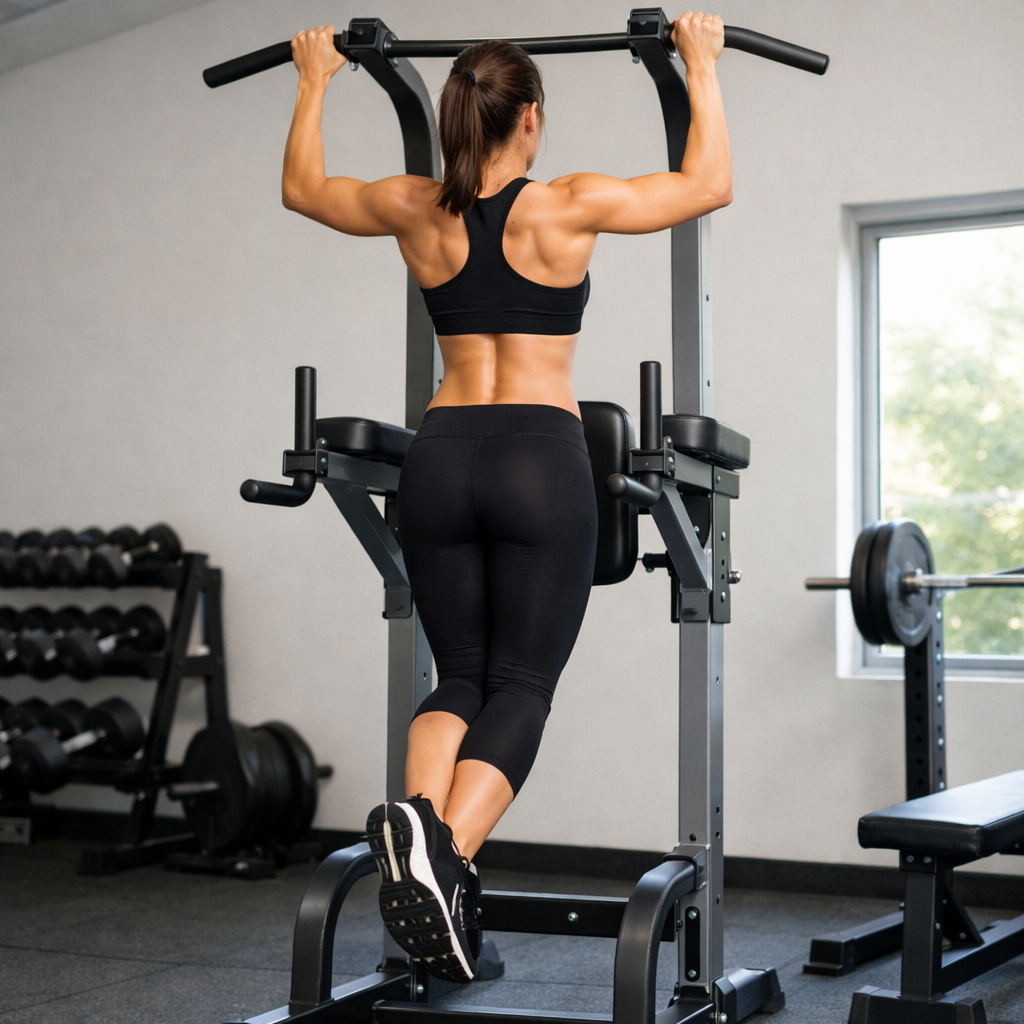
About Power Towers for Home Gym
Can a doorframe pull-up bar damage my door frame?
Quality doorframe bars with foam-padded contact points are generally safe for standard door frames. Avoid using them on hollow-core doors or unusually narrow/wide frames. Check the weight rating — most quality bars support 250–300 lbs. If you’re concerned, ceiling-mounted pull-up bars or power towers provide more secure alternatives.
How do I work up to my first pull-up?
Start with dead hangs (build grip and lat activation), band-assisted pull-ups, and negative pull-ups (jump to the top and lower slowly for 3–5 seconds). Lat pulldowns and rows also help build the prerequisite strength. Most beginners can achieve their first unassisted pull-up within 4–8 weeks of consistent training.
What muscles does a pull-up work?
Pull-ups primarily target the latissimus dorsi (lats) — the large muscles of the mid-back — along with the biceps, rhomboids, rear deltoids, and core. Chin-ups (palms facing you) shift more load to the biceps. Wide-grip pull-ups increase lat stretch; close-grip increases bicep involvement.
How many pull-ups is a good number to aim for?
Being able to do 5–10 unbroken pull-ups is a solid goal for most people. 10–15 represents above-average upper body pulling strength. Weighted pull-ups at bodyweight+ are advanced. If you’re starting from zero, focus on completing 3 negative reps as your first milestone.
Should I do pull-ups or lat pulldowns?
Both are effective, but pull-ups also train grip, shoulder stability, and core in ways a machine cannot. For beginners who lack the strength for even one pull-up, lat pulldowns are a practical substitute while building toward the real thing. Use pulldowns as assistance work, not a permanent replacement.
Leave a Reply